Snowville Arabesque · 01
Genesis
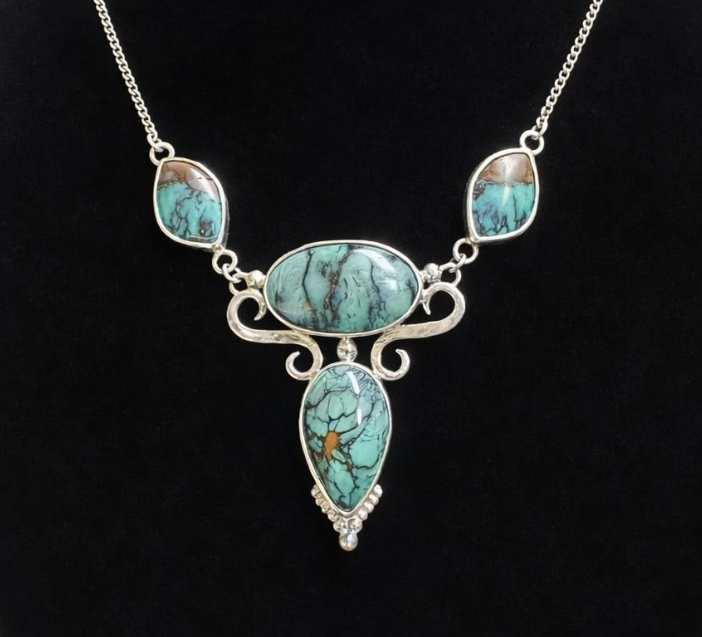
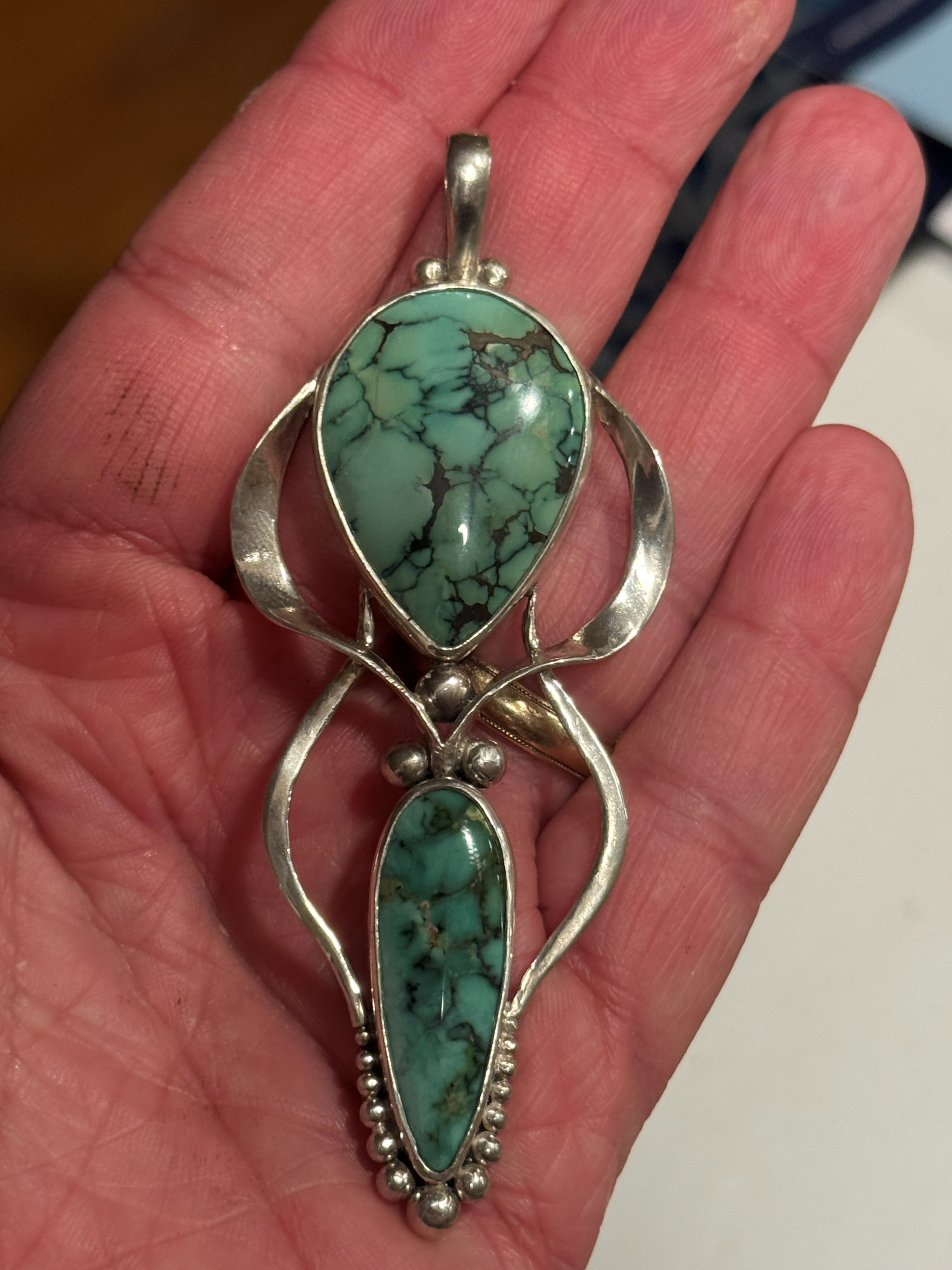
The first piece I made in the Snowville Arabesque series, built around the flowing curves that became the basis for the rest of the line.
AvailableEmail to inquire →
Statement pieces · Snowville Arabesque
These larger, one-of-a-kind pieces begin with an unusual stone or a group of stones that work especially well together. I cut and arrange the stones first, then build the silverwork around them by hand.
See the pieces ↓The collection
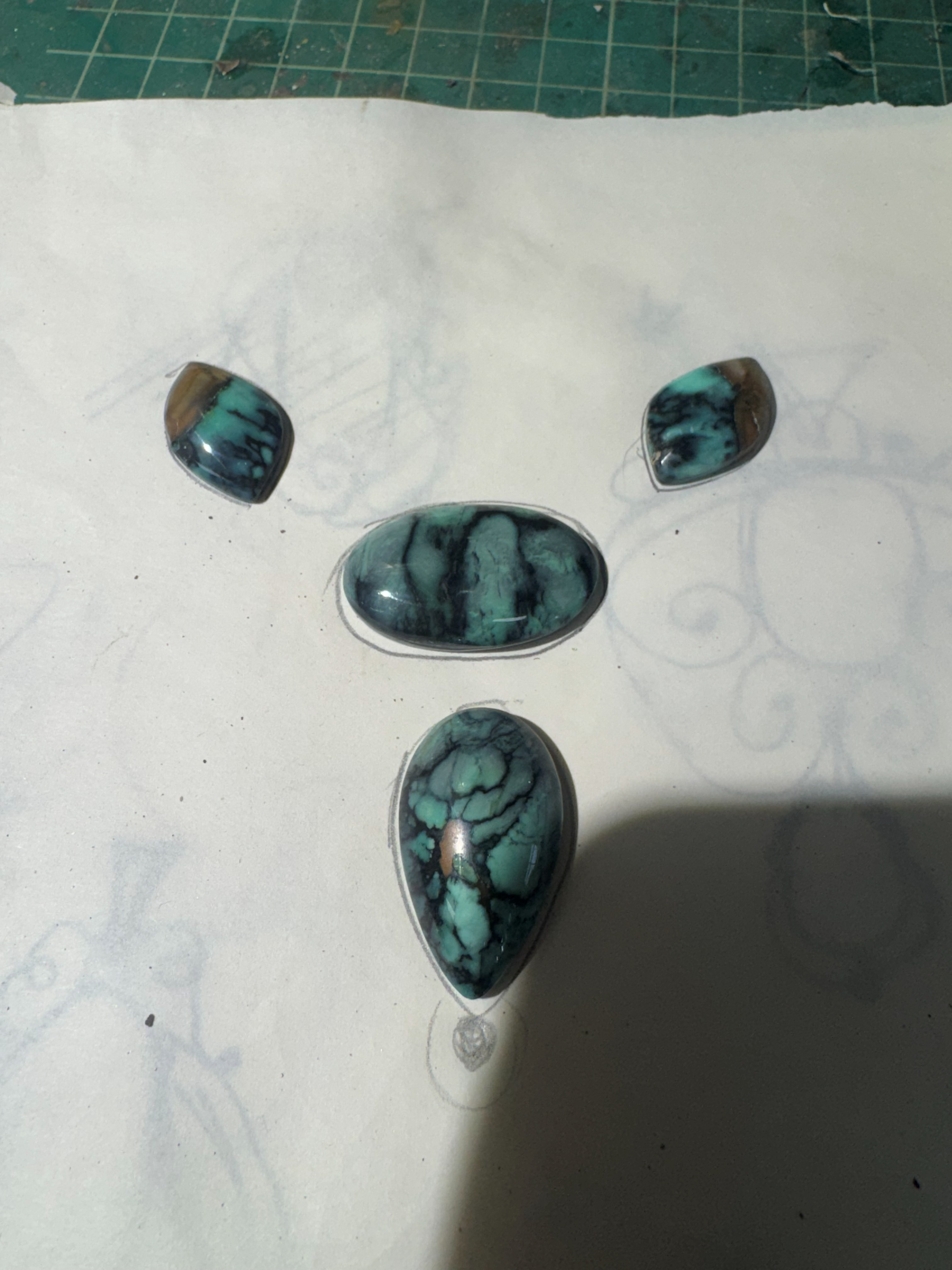
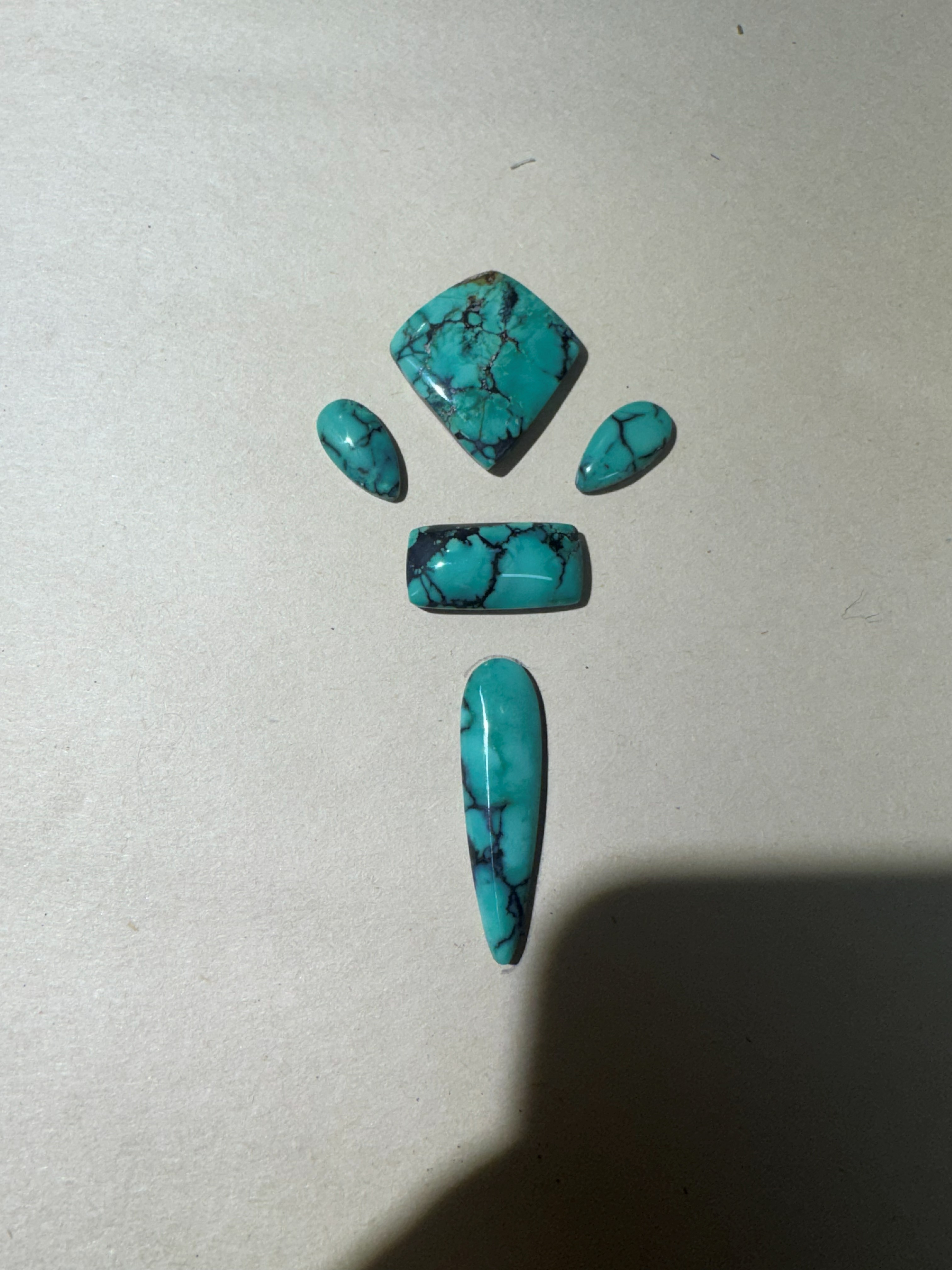
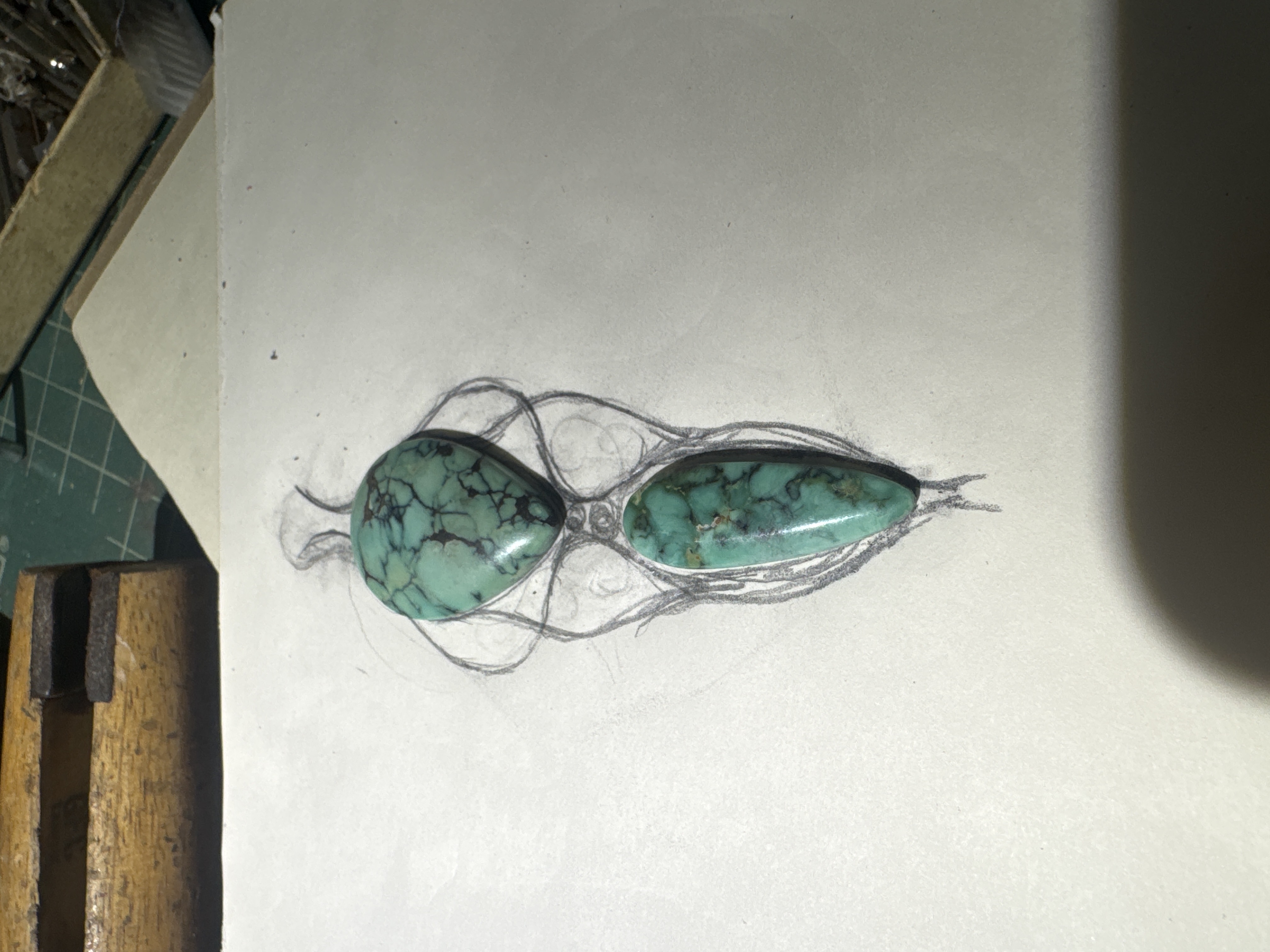
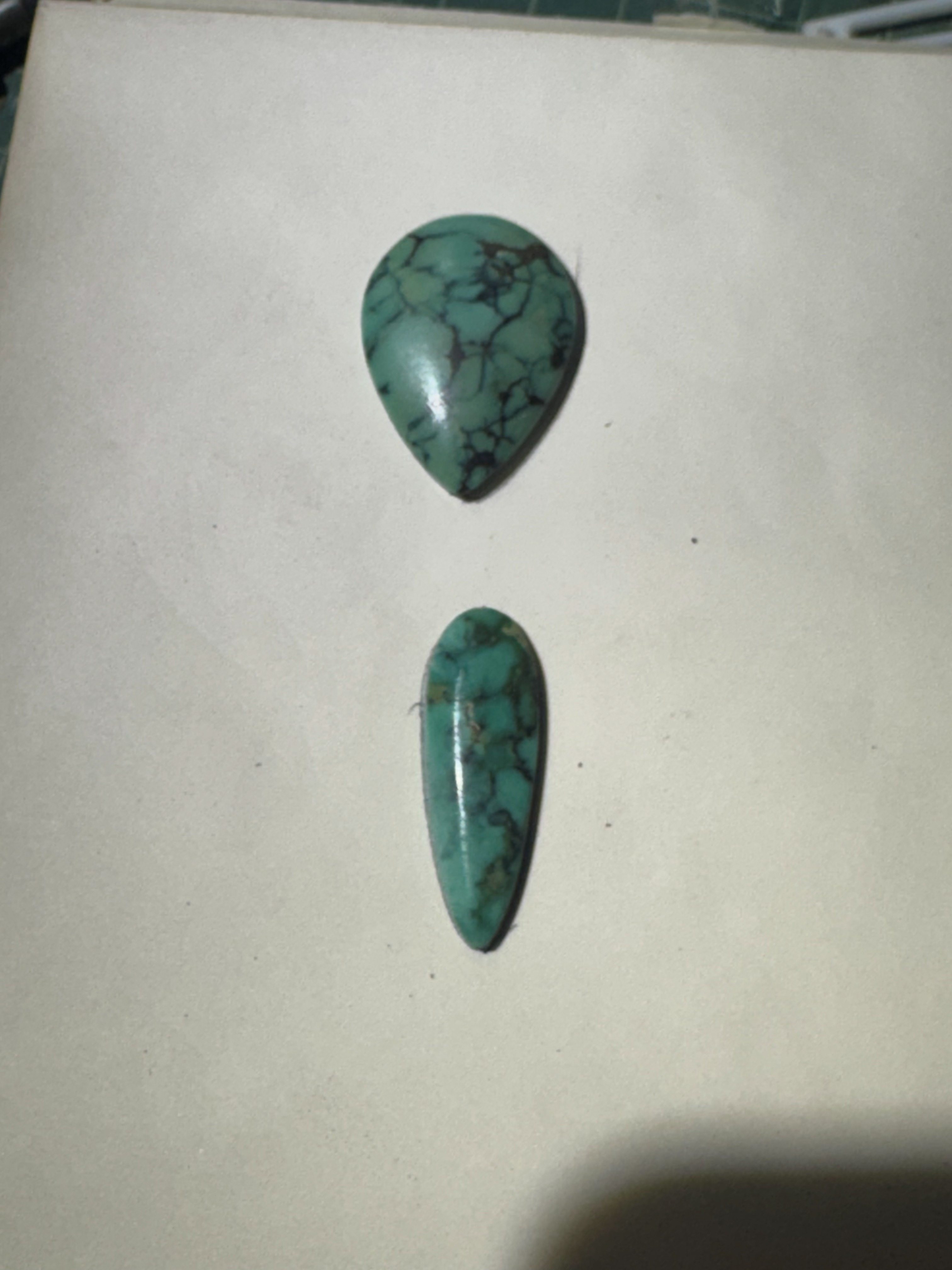
The process begins with a lead stone. I compare other cabochons for color, pattern, shape and quality, arranging them in different ways until I find an arrangement where the stones look right together.
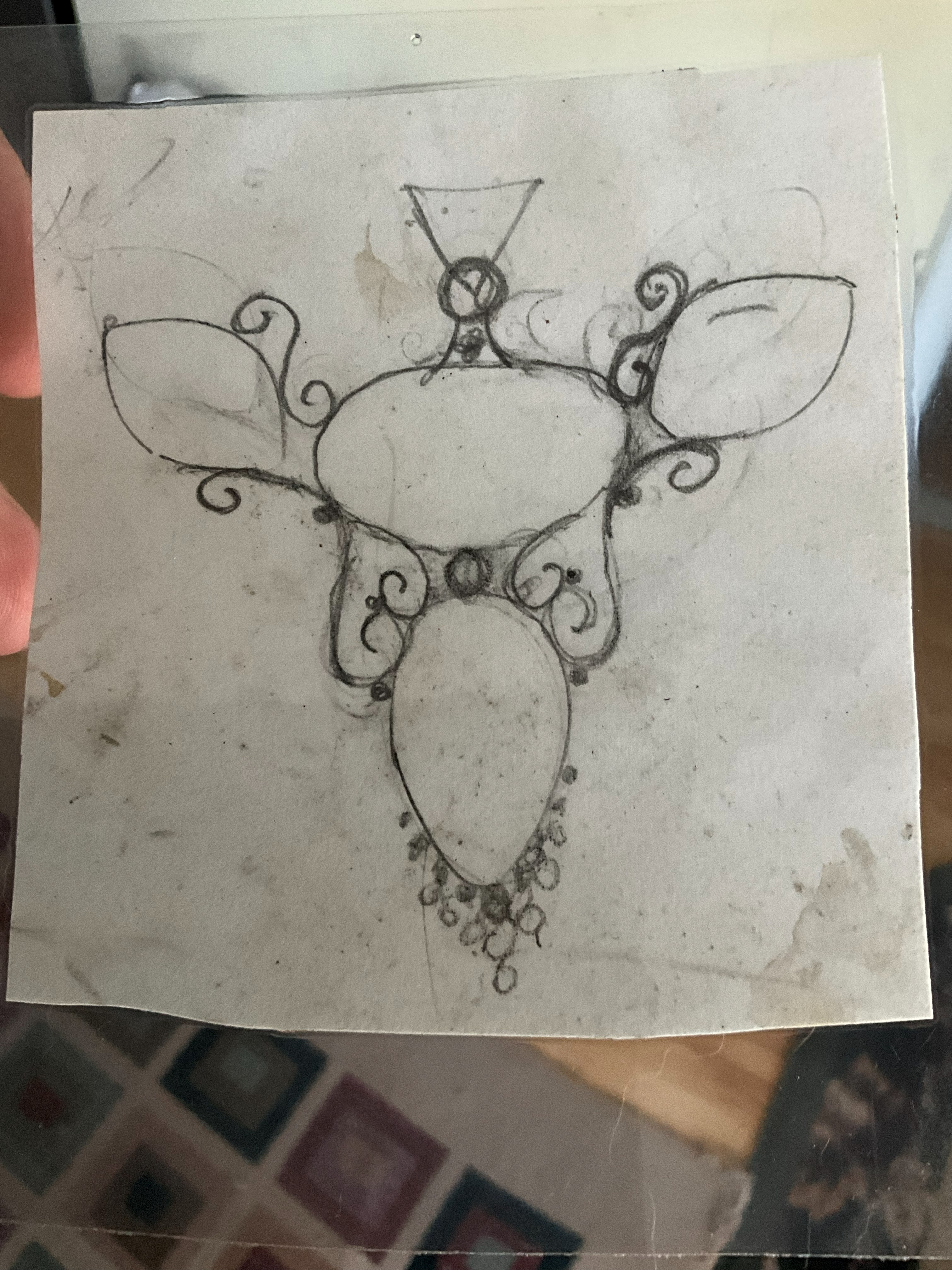
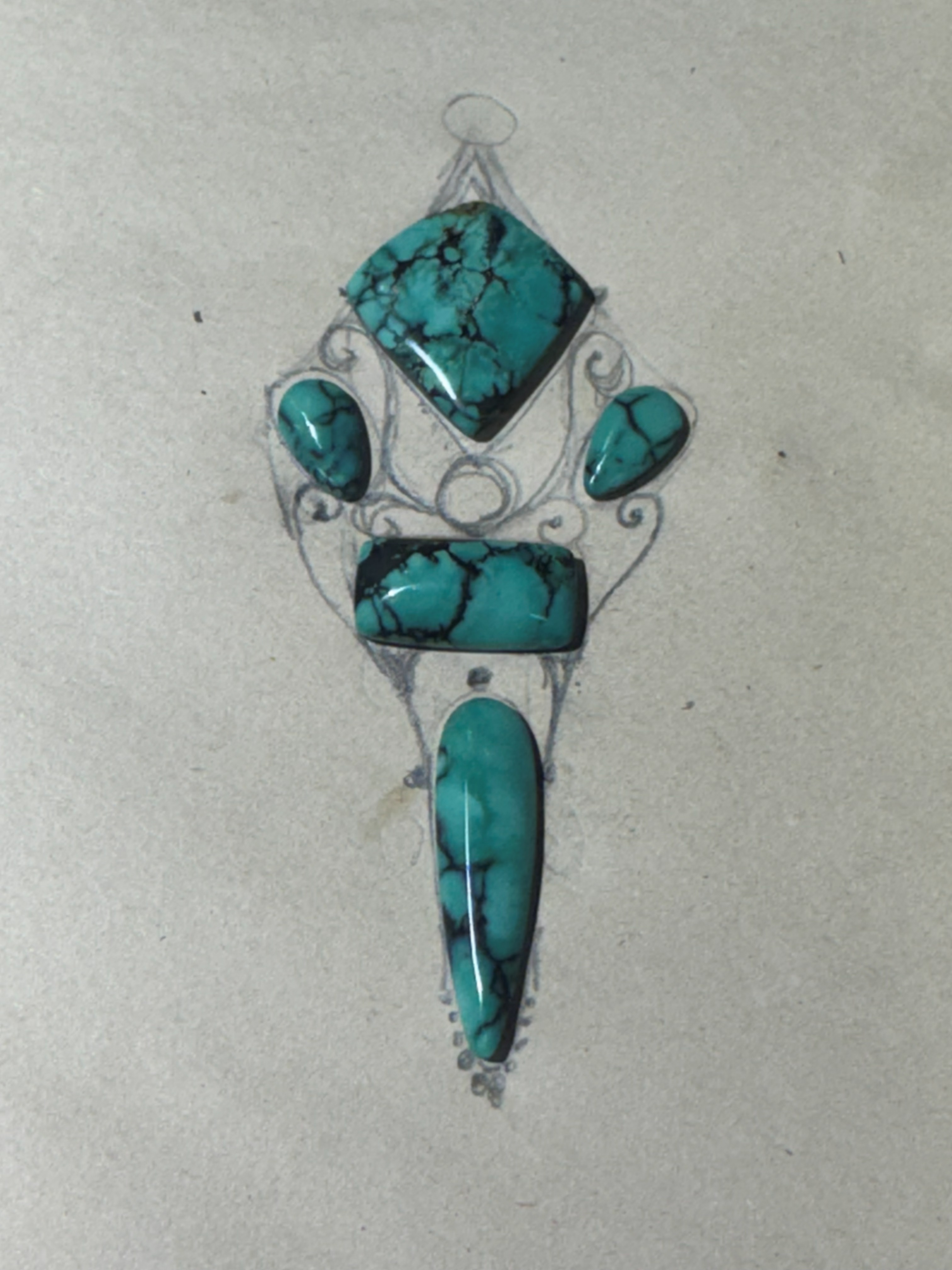
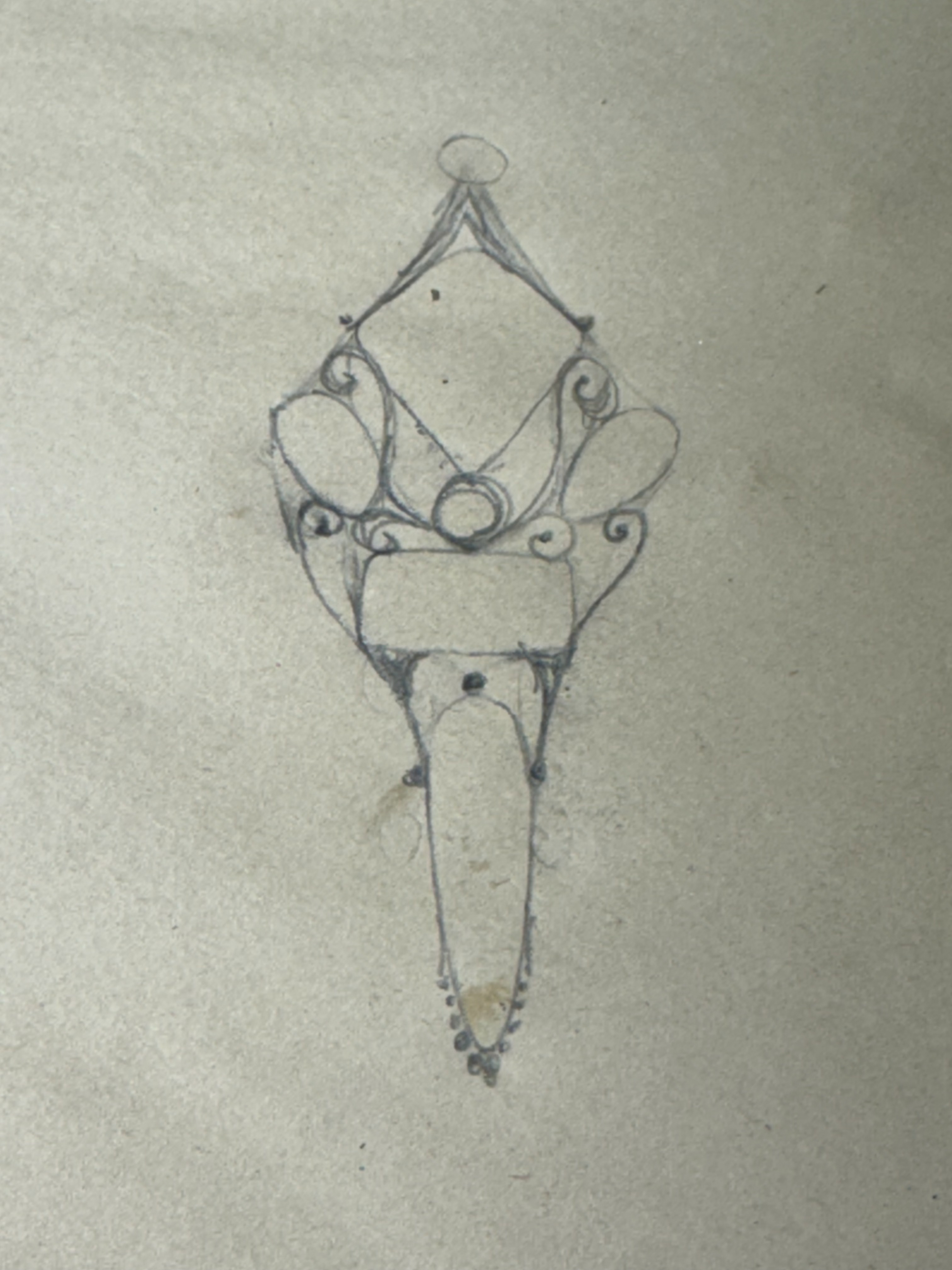
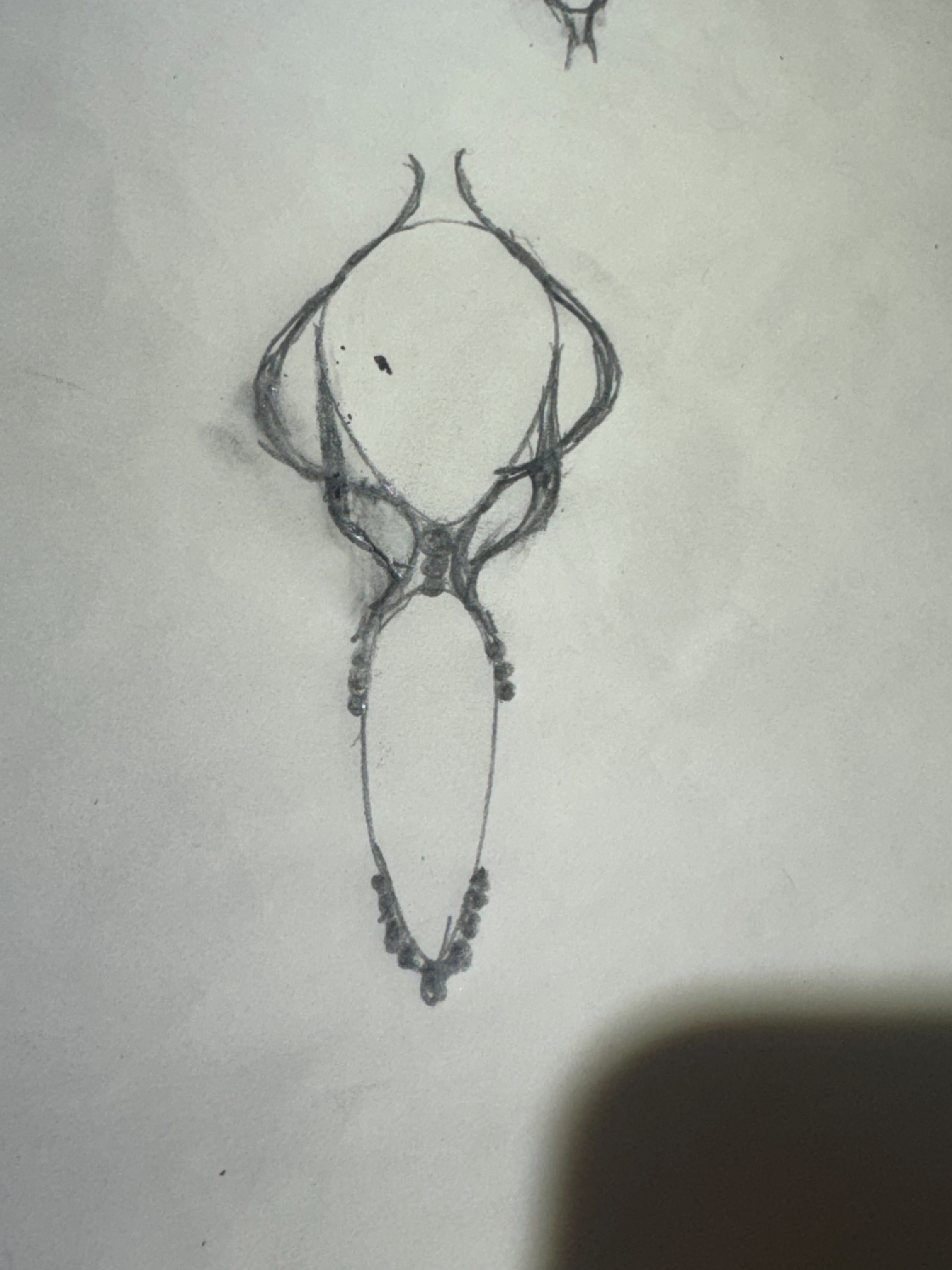
Once the layout is established, I outline the stones on paper and begin sketching the silver elements around them. I usually work through several versions before choosing a direction that appeals to me and can be brought to life at the bench.
Fabrication begins with the bezels and bezel plates. From there, every silver element is shaped and fitted individually, using the sketch as a guide. The finished piece does not always match the drawing exactly. Changes often occur during fabrication when a different curve, connection or proportion creates a stronger result.
Current line
Natural, untreated Snowville Variquoise paired with flowing silverwork influenced by Art Nouveau. I cut every stone in this line and combine stones whose color, pattern and shapes work especially well together.
Read the Snowville material story →Snowville Arabesque · 01
The first piece I made in the Snowville Arabesque series, built around the flowing curves that became the basis for the rest of the line.
Snowville Arabesque · 02
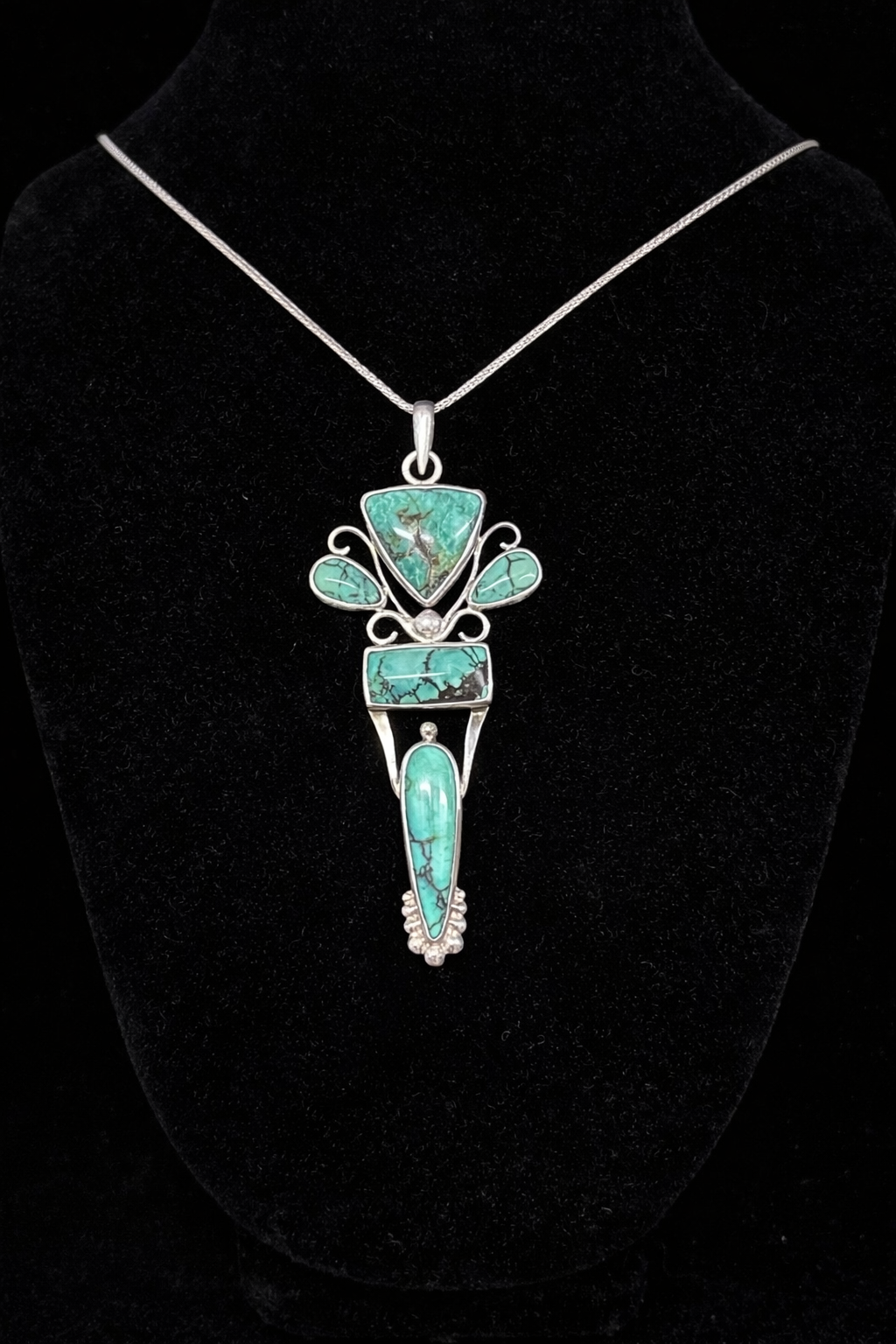
Five Snowville stones arranged vertically, with the silverwork designed to connect the shapes without overpowering the stones.
Snowville Arabesque · 03
A simpler two-stone piece with flowing silver lines and a subtle botanical influence.
Included with every Statement Piece
The working sketch is part of the finished work. Once the jewelry is complete, I sign and date the original drawing, cut out the portion containing the design and laminate it for the owner.
It’s a small record of how the piece started and gives the owner the original drawing that led to the finished jewelry.