FINELAPIDARY ARTS
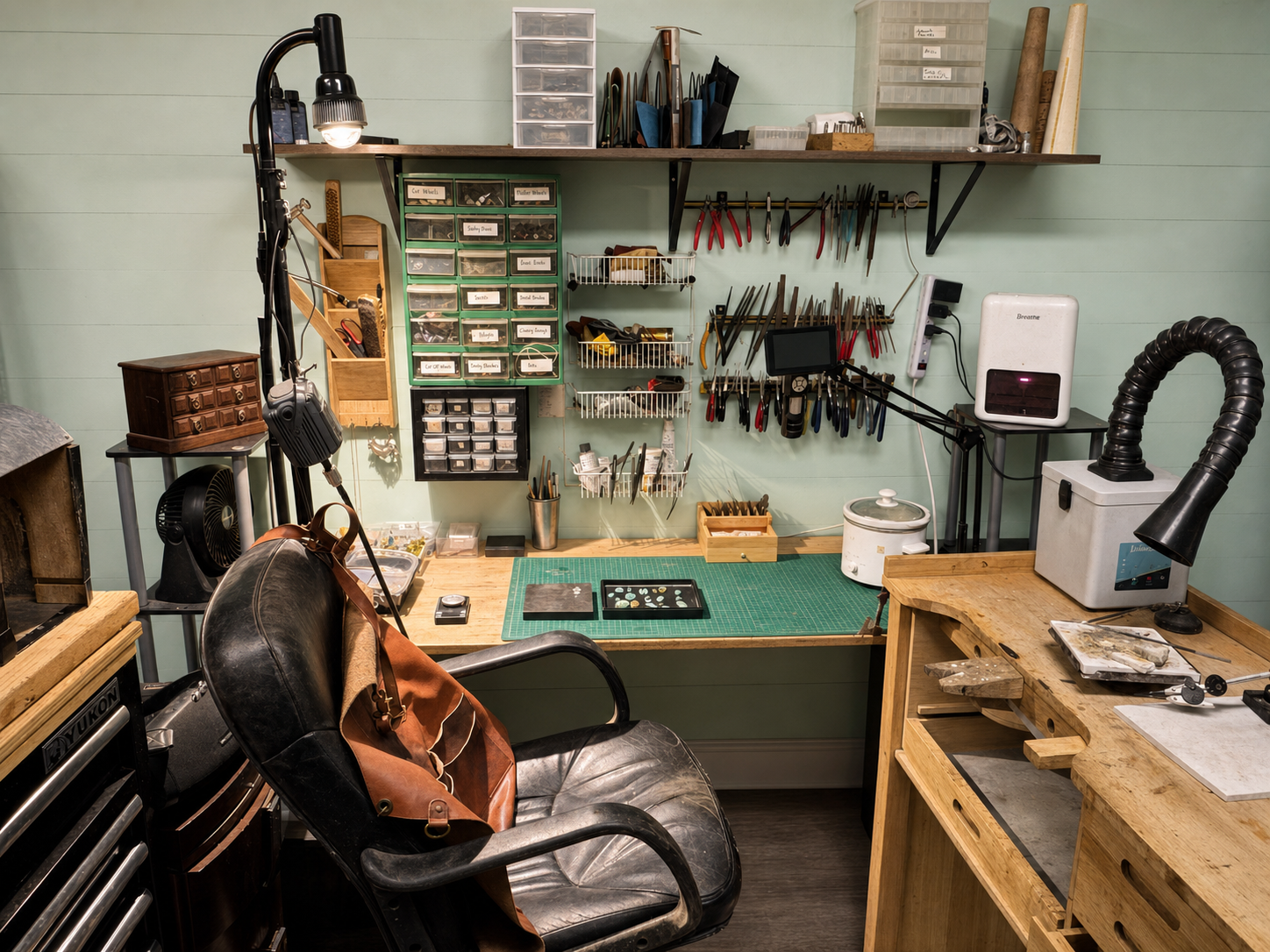
Inside the Fine Lapidary Arts studio

The maker

Jim Campbell

Collector, cutter
and silversmith.

Fine Lapidary Arts is my working studio. I collect and source rough, cut stones for my own jewelry and for other makers, and fabricate one-of-a-kind pieces in sterling silver. My work ranges from simple, material-forward settings to flowing designs influenced by Art Nouveau.

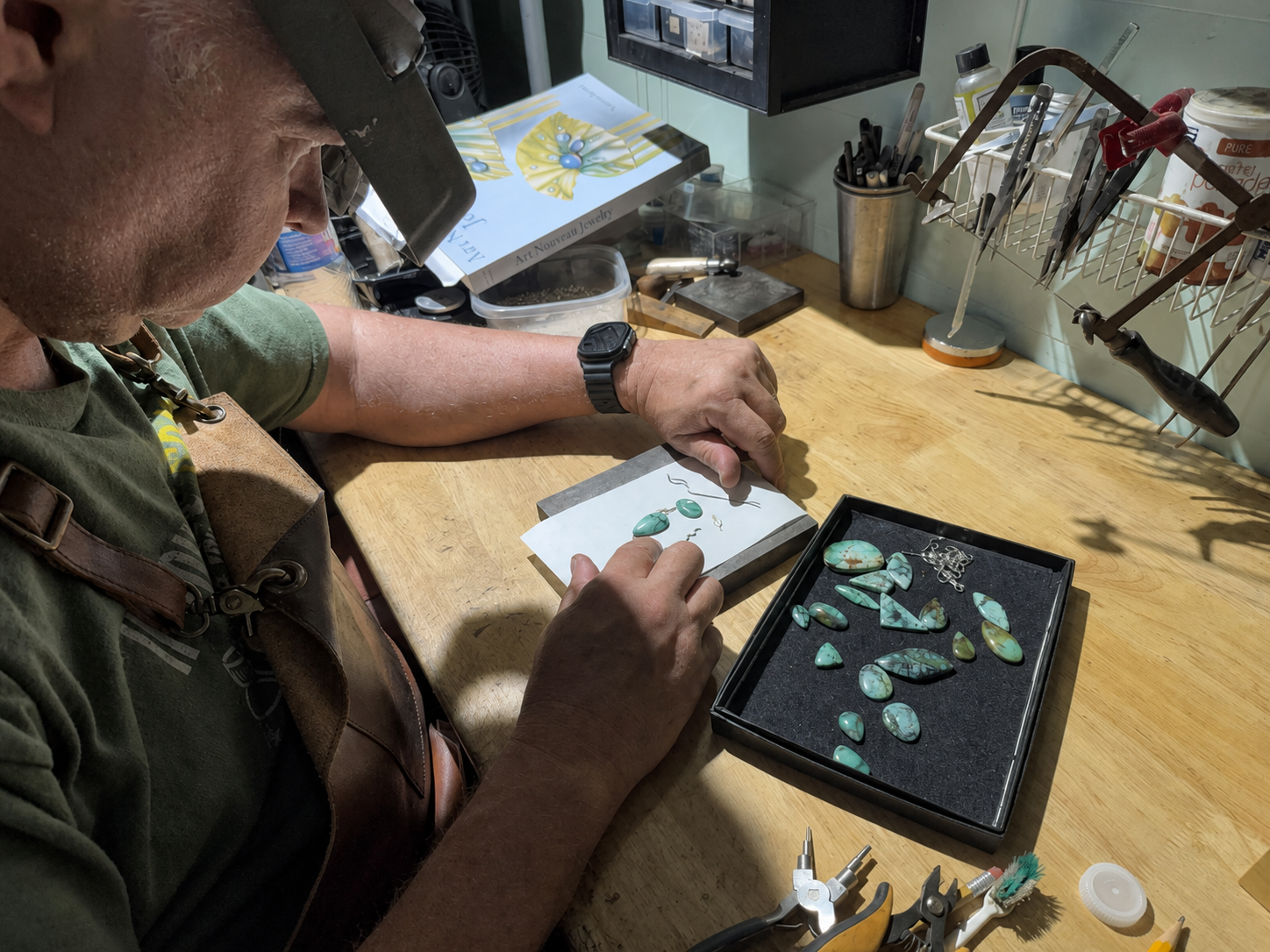
Jim Campbell arranging hand-cut stones while developing a jewelry design at the workbench
The workbench where stones, sketches and silver come together.

One maker.
From stone to setting.

I source the material, cut each stone, and fabricate the jewelry by hand, allowing the stone and its setting to be designed as one complete piece.

01

Why sourcing matters

A stone carries more meaning when its story is known. Its type, region, locality, and specific mine when possible help explain its color, pattern, rarity, and character. Most of the material I work with is purchased directly from the miners, and some of it I mine myself. I also attend some of the largest gem shows in the world to meet miners in person, learn about their material, and purchase directly from their inventory. Knowing where a stone comes from gives you confidence that it is genuine, accurately represented, and not mixed into bulk-cut commercial material.

02

Why cutting matters

Cutting is where I listen to the stone. Rather than forcing it into a standard commercial shape, I follow the color, pattern, structure, and natural direction of the material to reveal what makes it special. Because I am both a cutter and a silversmith, I understand how a finished stone’s shape and durability affect the kind of jewelry it can become. That experience guides my decisions about balance, edge strength, polish, and overall quality from the very first cut.

03

Why fabrication matters

Fabrication means building a piece directly from sheet, wire, tubing, and other forms of metal. Each part is cut, shaped, formed, fitted, soldered, and finished by hand. It takes years of bench work to learn these skills, and many more to combine them into work that is strong, comfortable, balanced, and well finished. Casting begins with a model or mold that can reproduce the same form. Fabrication allows me to build each piece individually, responding to the exact stone rather than adapting it to a repeated design.
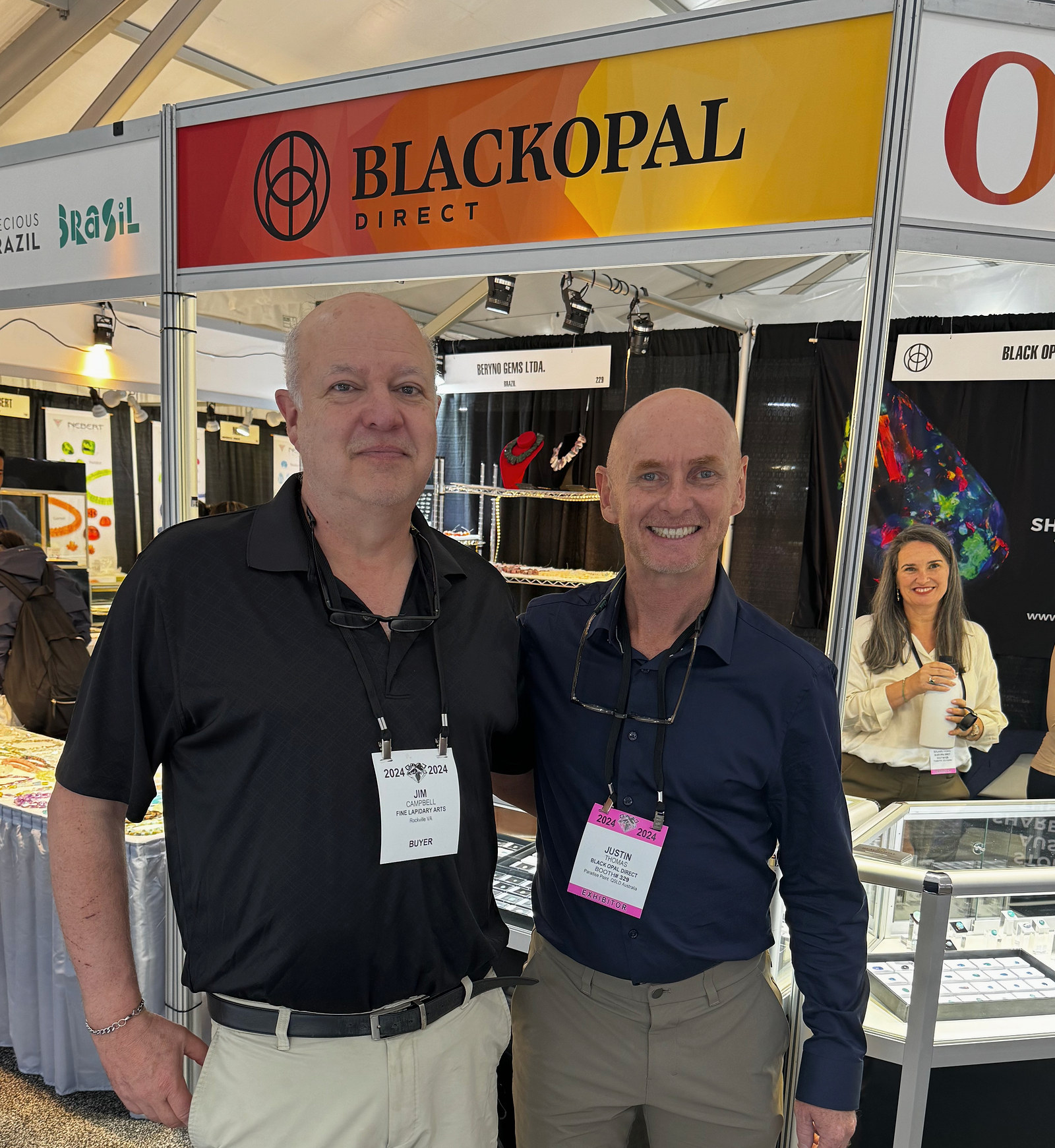
Jim Campbell meeting Justin Thomas of Black Opal Direct at a major gem show

Direct relationships

Meeting the people behind the material.

Jim Campbell with Justin Thomas of Black Opal Direct. Meeting miners and trusted suppliers in person is an important part of understanding what a stone is and where it came from.

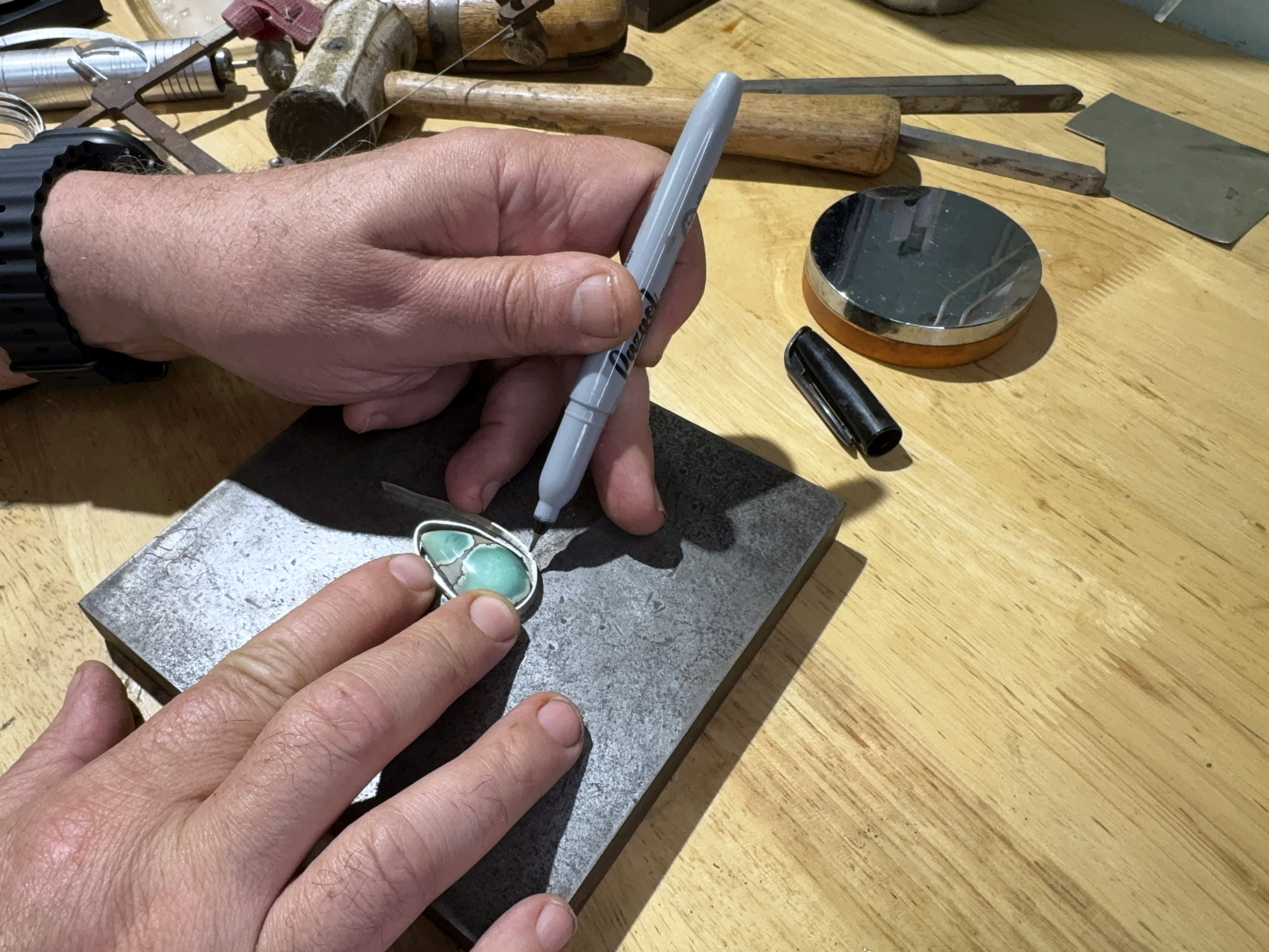
Developing fabricated silver around a hand-cut stone at the bench

Fabrication at the bench

Drawn, fitted and built for the individual stone.

The work develops directly around the cabochon, with each silver element marked, shaped and fitted by hand.

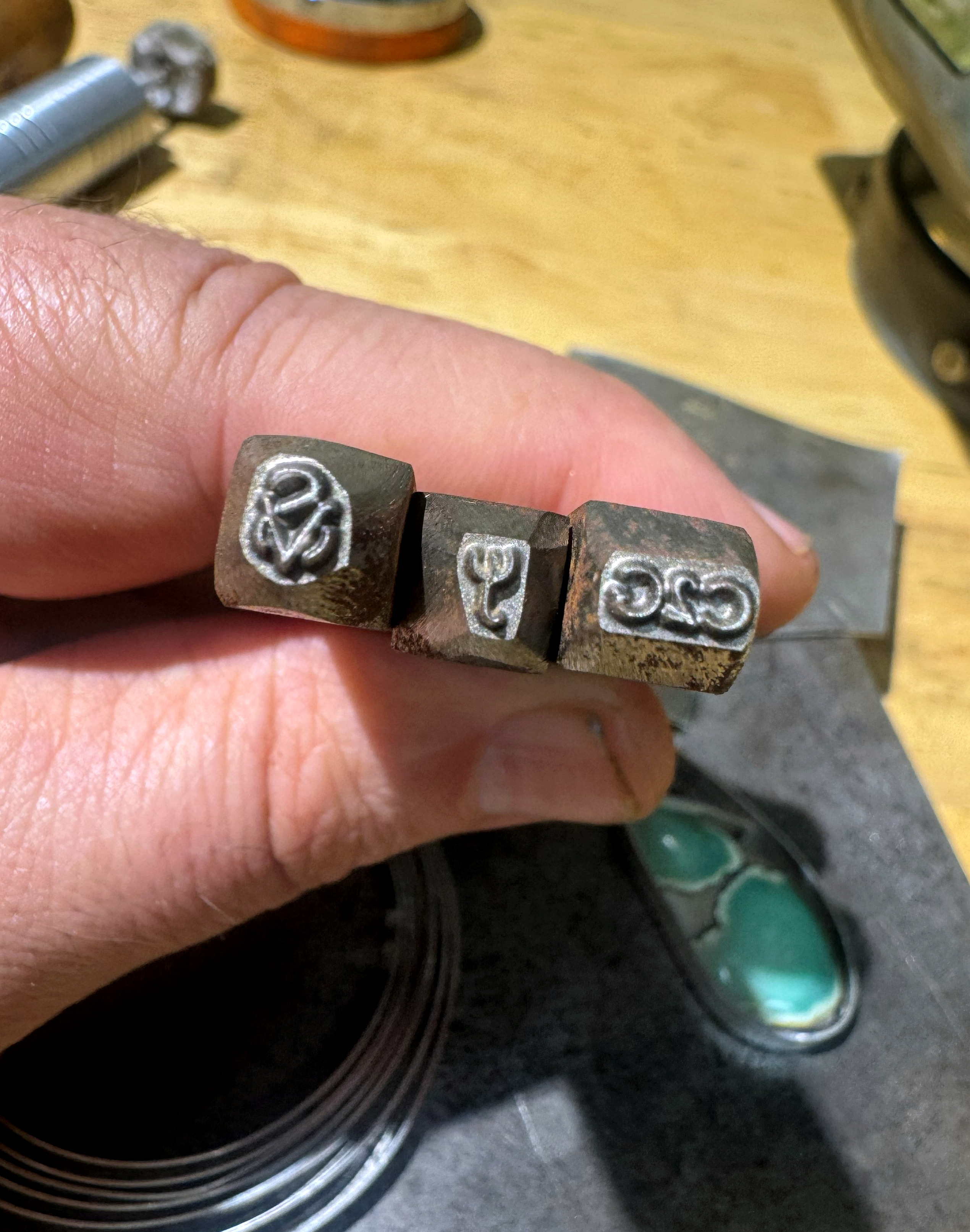
The maker’s metal stamps used to identify finished work
The maker’s marks identify work made in the studio.

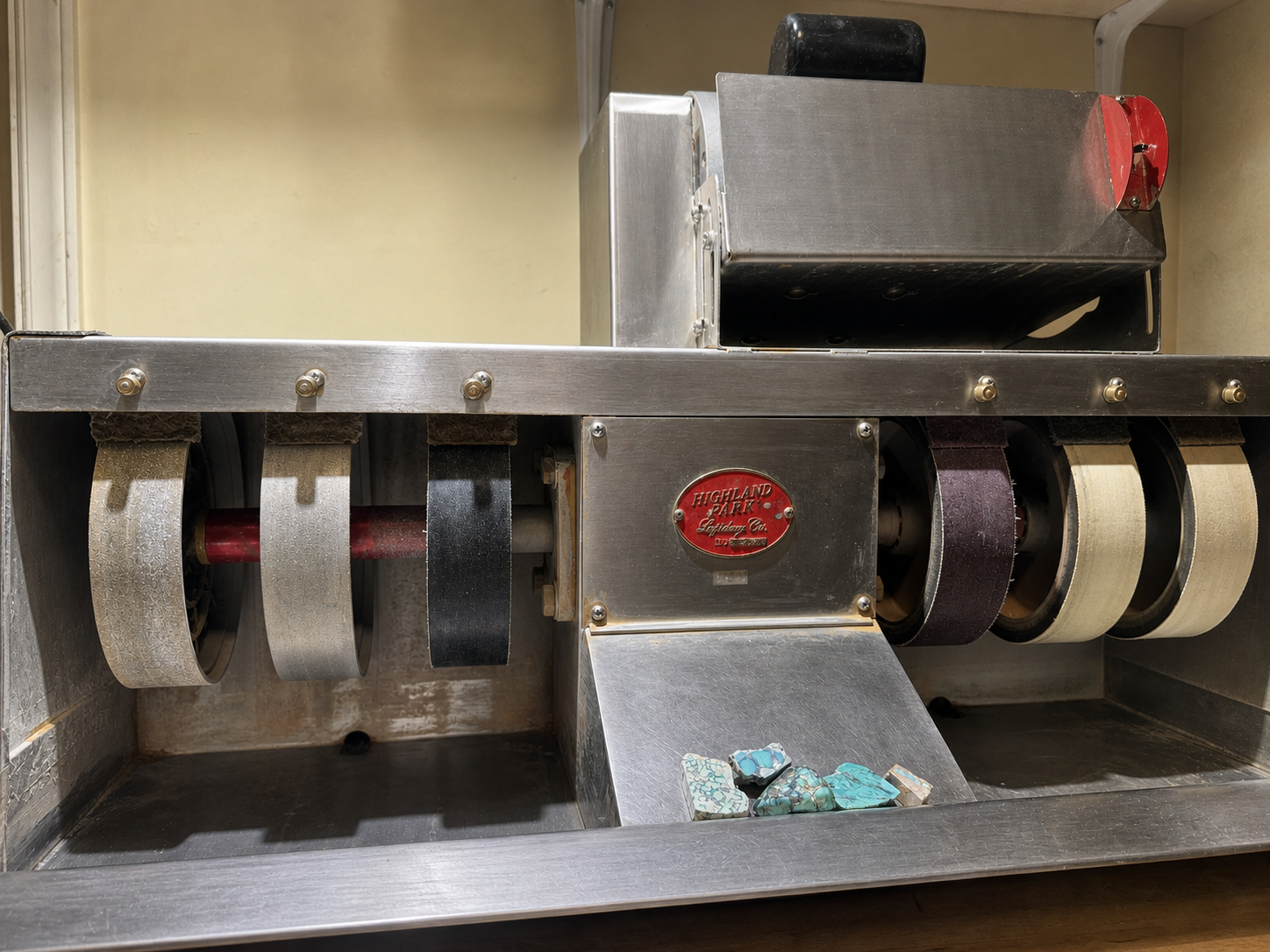
Inside the studio

Cut and fabricated
under one roof.

Cutting and shaping in the Fine Lapidary Arts studio
Cutting and shaping
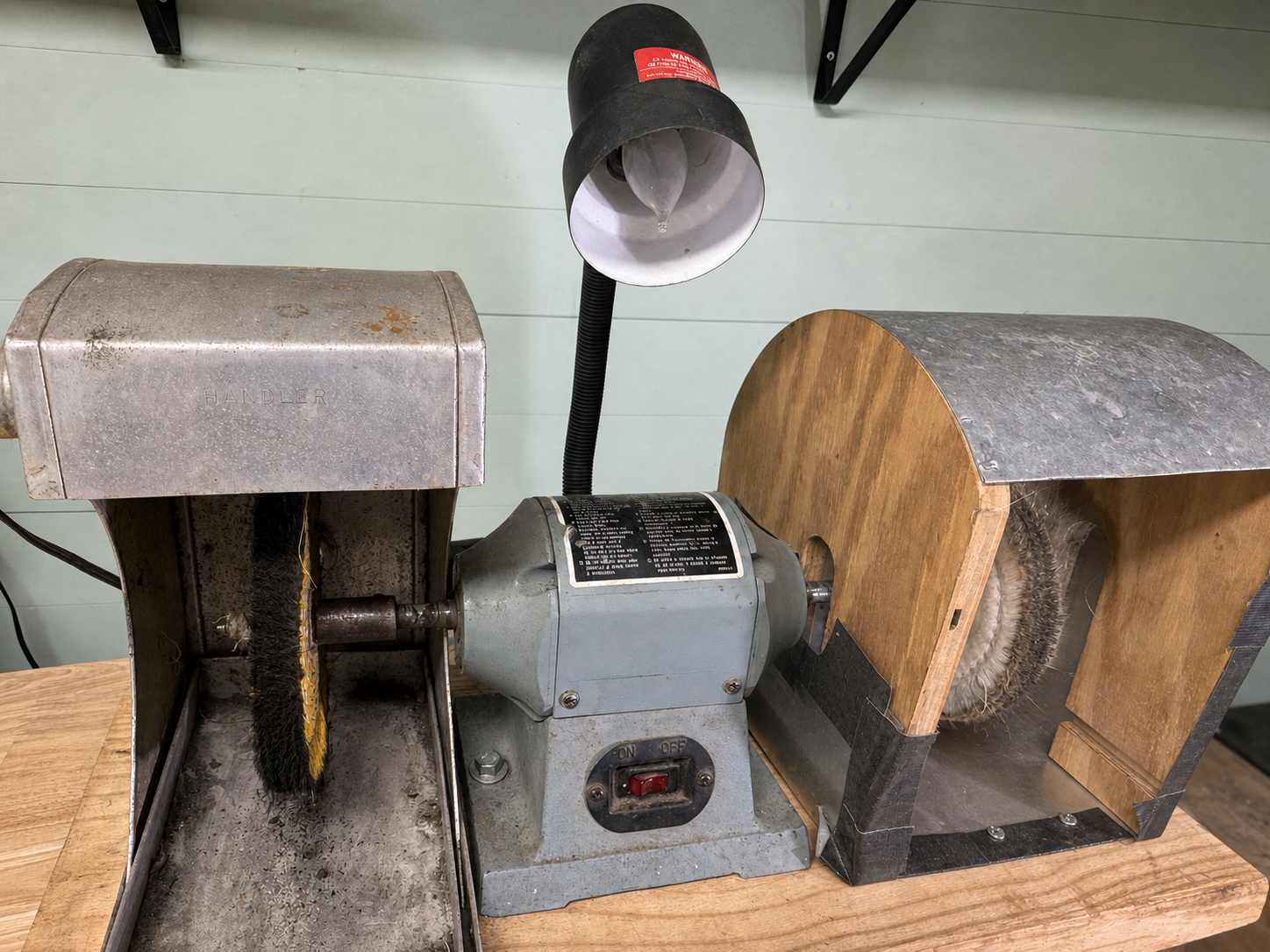
Finishing and polishing in the Fine Lapidary Arts studio
Finishing and polishing
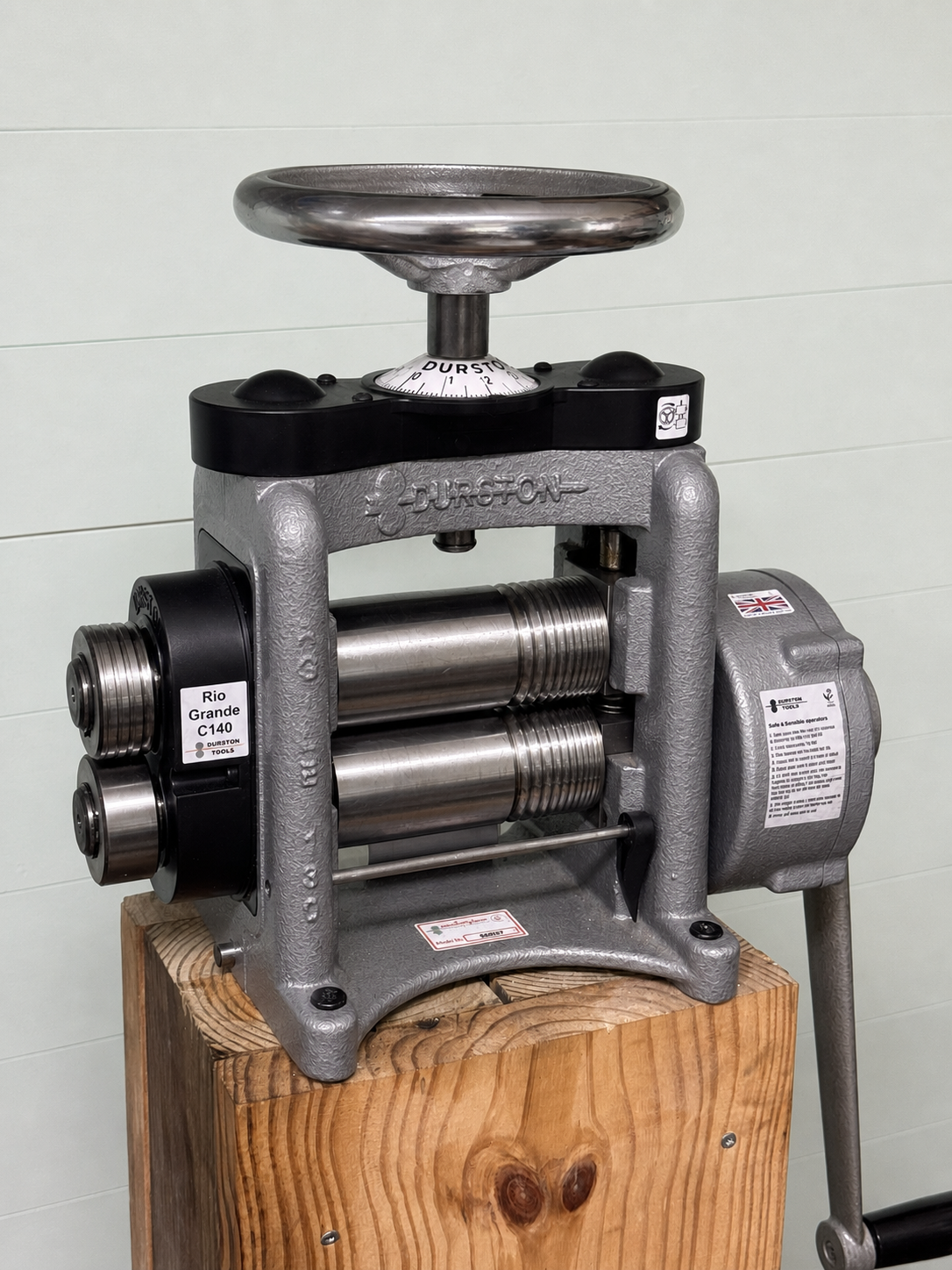
Forming the silver in the Fine Lapidary Arts studio
Forming the silver
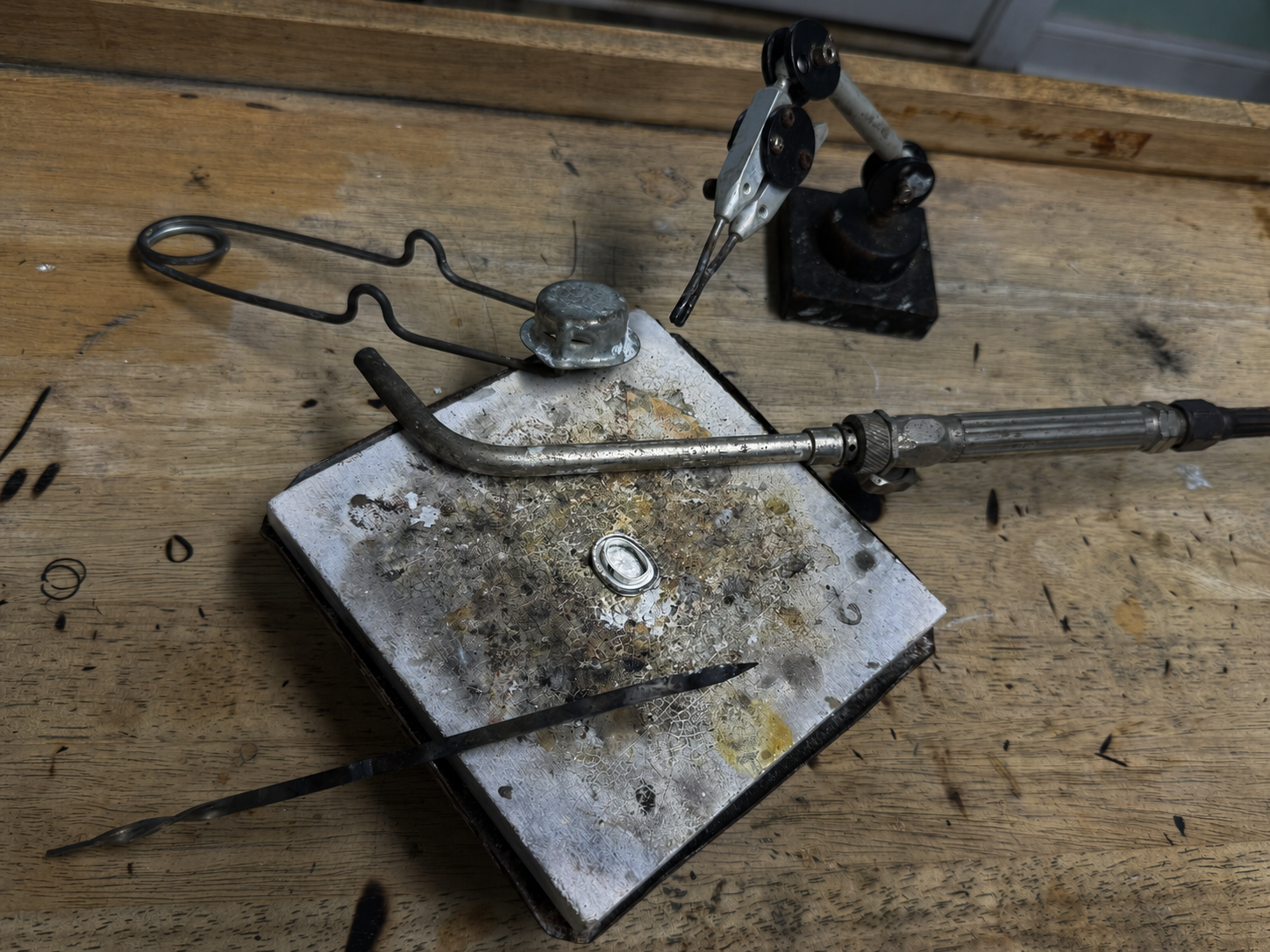
Soldering and assembly in the Fine Lapidary Arts studio
Soldering and assembly