Stone & material story
Picture Stones
Some stones hold a landscape, a familiar form or something that simply waits for the right point of view.
What makes a picture stone?
It is not limited to one kind of material.
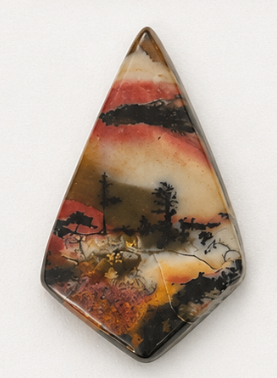
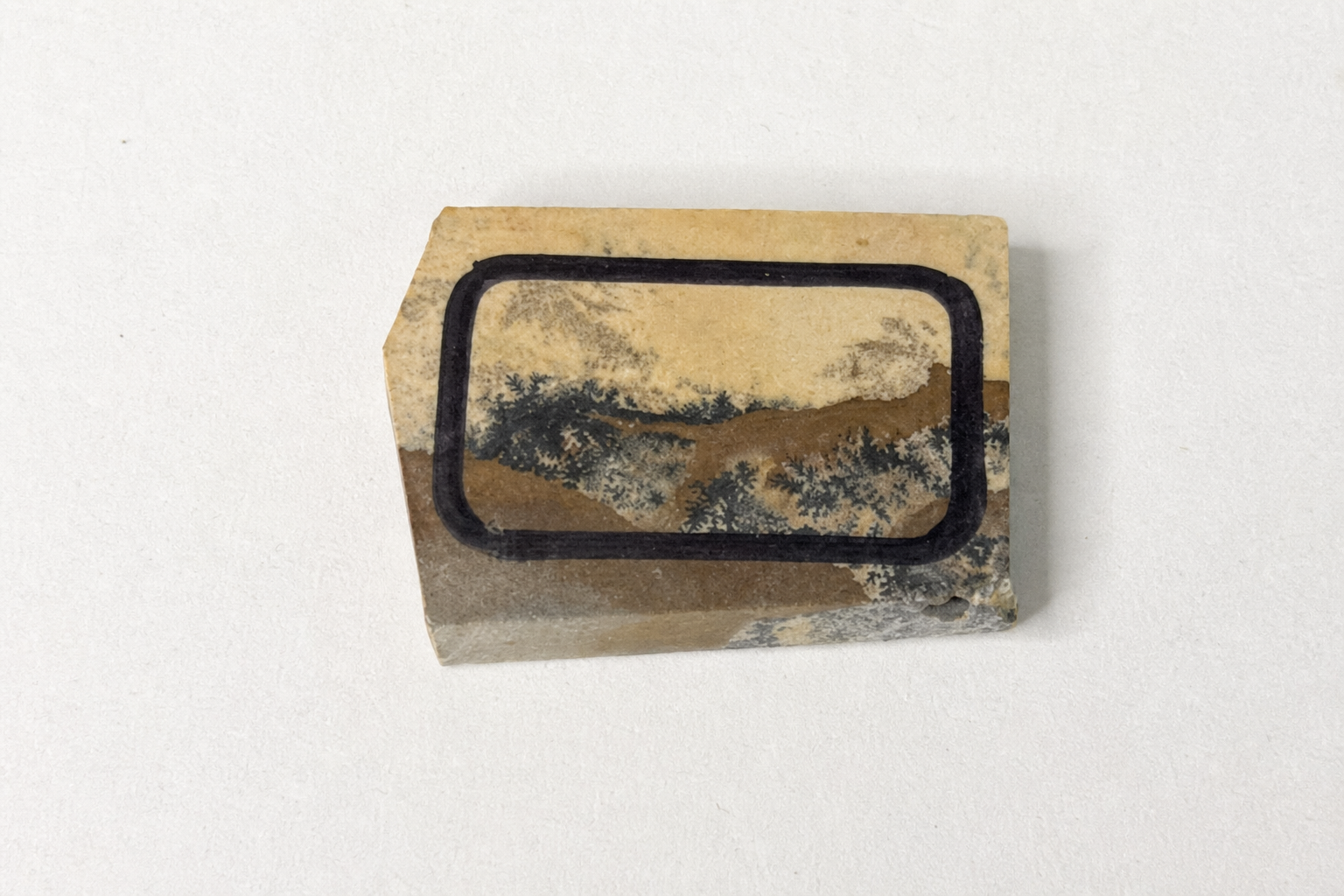
Dendrites can resemble trees, especially when they sit within bands that look like land and sky. Other stones create landscapes, oceans or distant horizons through color and pattern alone. Sometimes the image is an object, an animal or another familiar form hidden in the stone.
The picture may be obvious on the surface, or it may only appear after the material is studied, turned and viewed from a different direction. That combination of rarity, demand and one-of-a-kind character can make a picture stone more valuable than similar material without a recognizable image.
A change in perspective
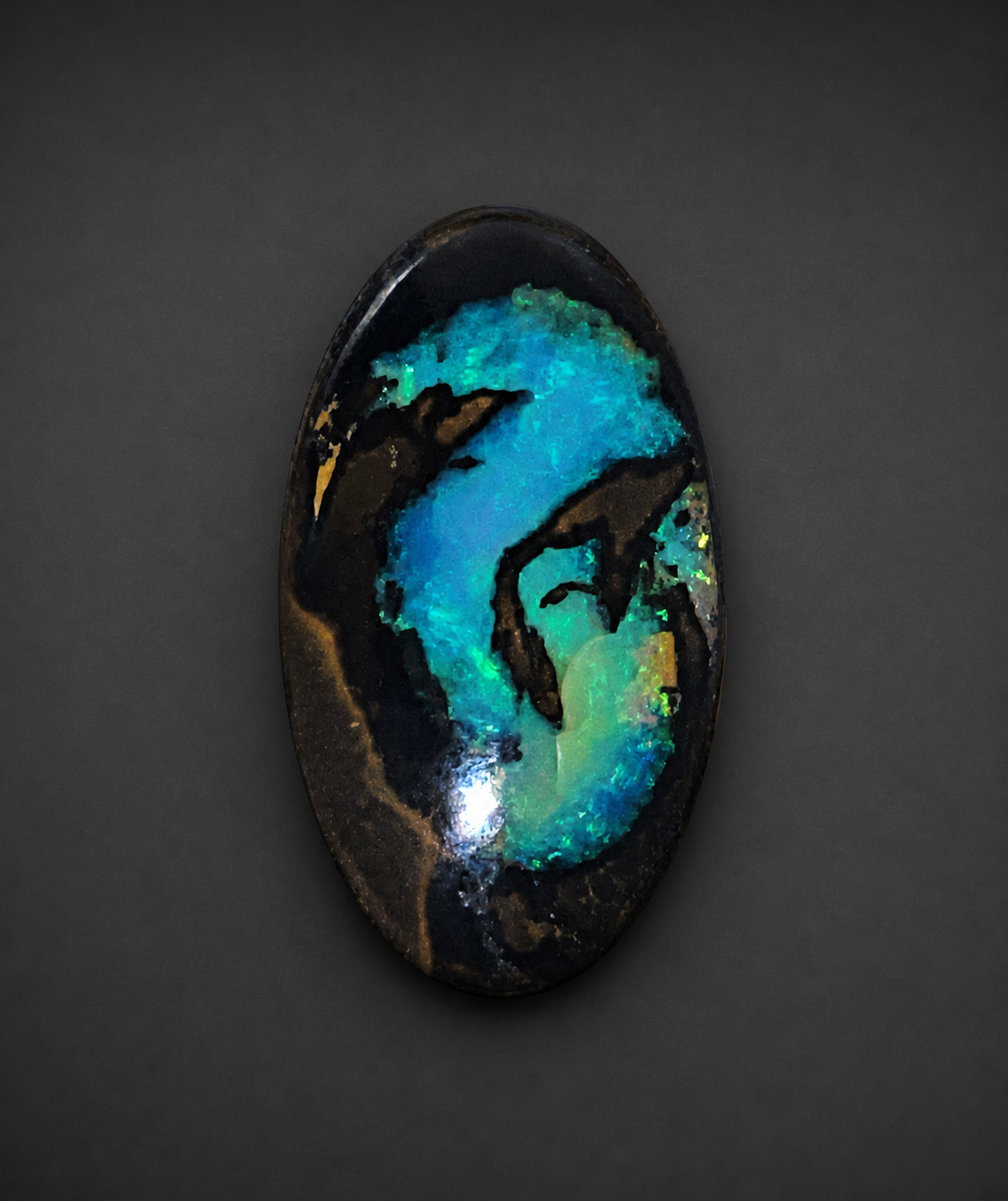
The Blue Dragon
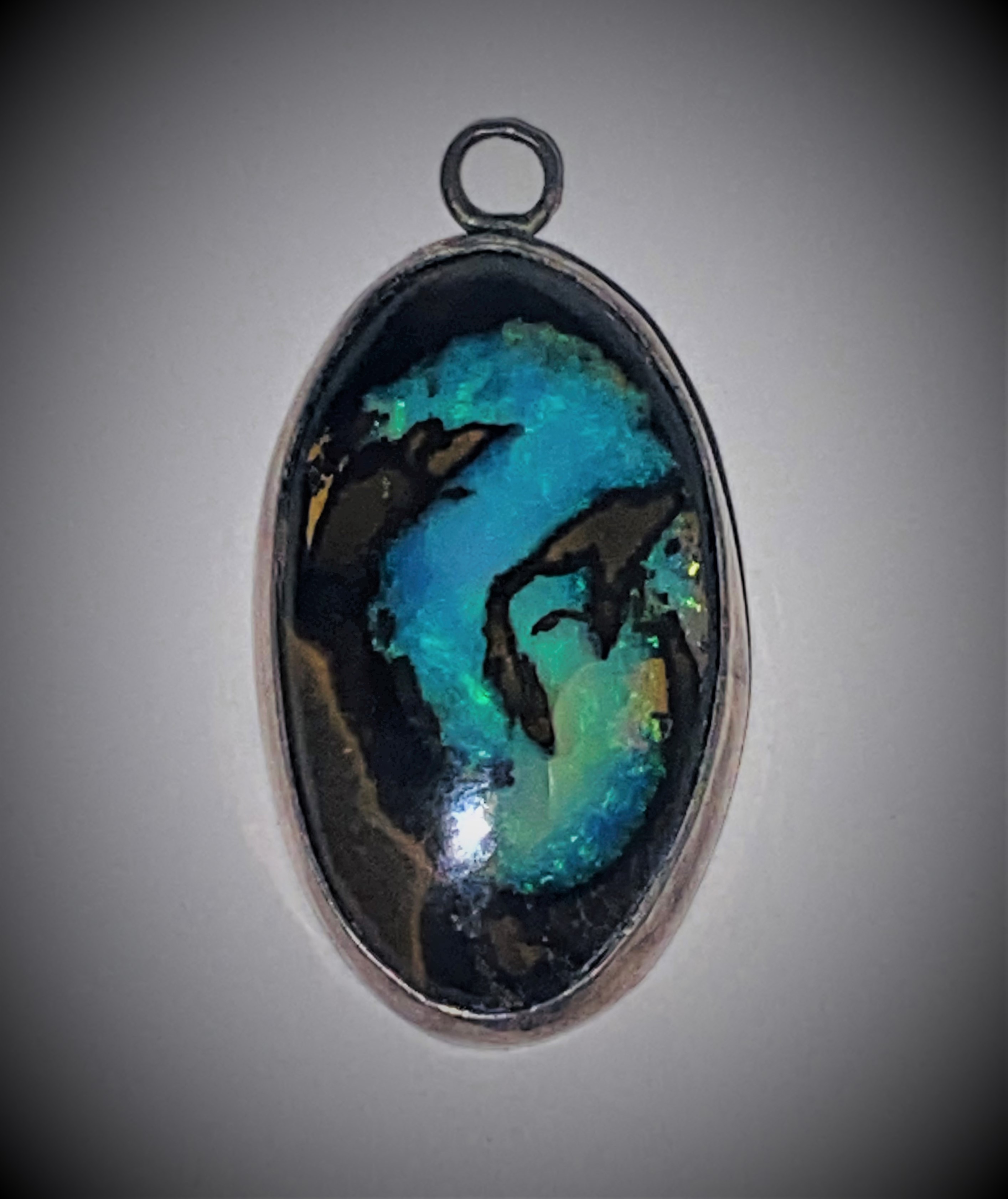
When I cut this boulder opal, I first thought the image looked like the number 2. Someone turned it upside down and saw a dragon instead. A blue dragon was a lot more exciting than the number 2, and it was a good reminder that the picture in a stone is not always seen from the first angle.
Cutting with purpose
Once you see it, you have to protect it.
After an image is identified, every cutting decision has to preserve it. Shaping the outline and creating the proper dome can remove part of the scenery. Dendrites are especially delicate when they sit near the surface, where a small change in angle or too much polishing can erase an important part of the picture.
The goal is to give the stone a strong, balanced shape without losing what made it worth cutting in the first place.
Early cuts
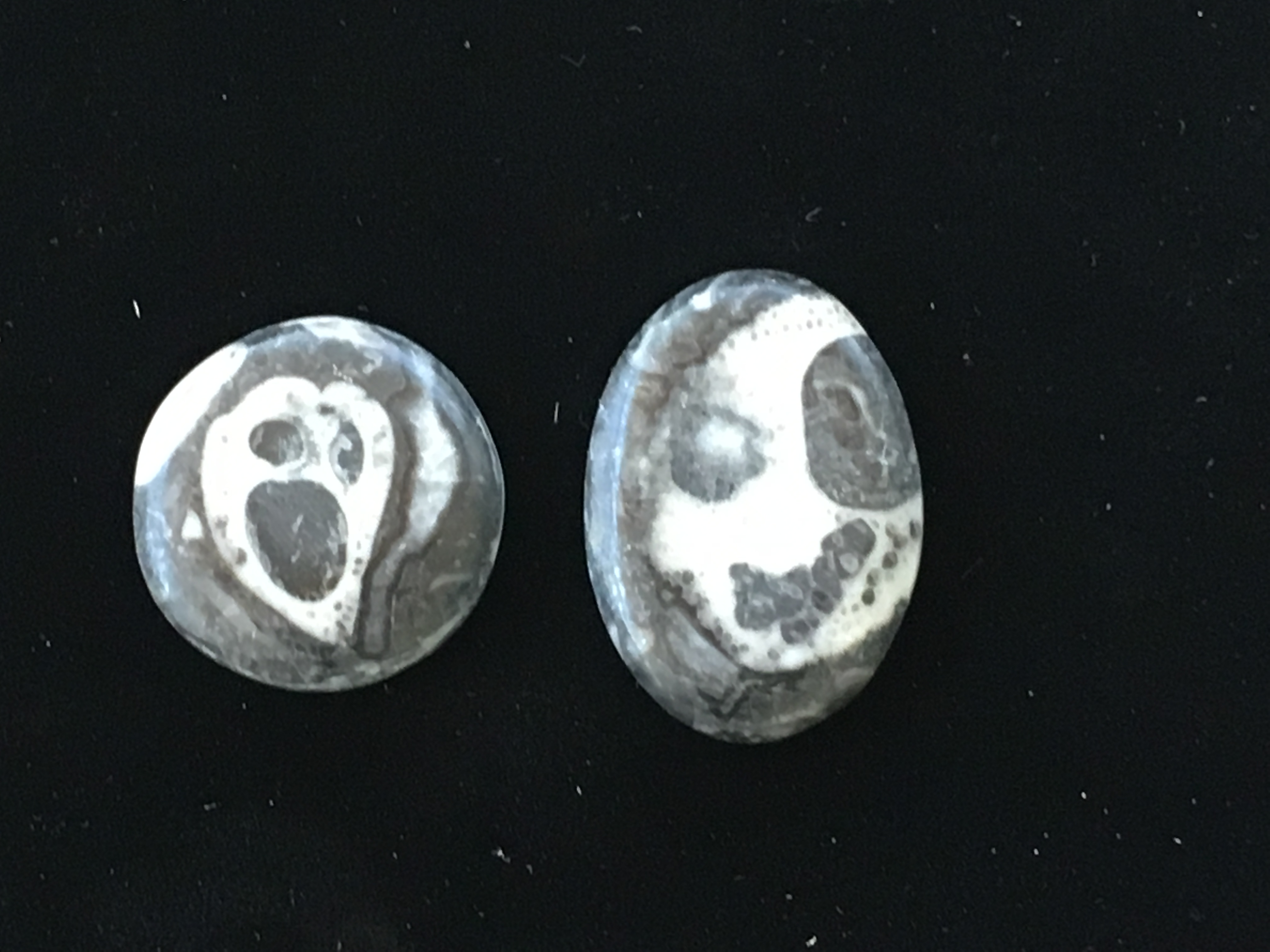
The Scream and The Jackal
These two early stones were cut from a slice containing fossilized shells in sedimentary stone. They do not have the bright color of the featured pieces, but their familiar forms show how a picture stone can emerge from almost any material.