FINELAPIDARY ARTS

Opal by origin

Every opal field has its own character.

Most of the opal I work with comes from Australia, including boulder opal from Queensland, Coober Pedy opal from South Australia and Lightning Ridge opal from New South Wales. I also offer carefully selected Ethiopian crystal opal, valued for its transparency, vivid color and distinctive character.

Every opal field has its own character.
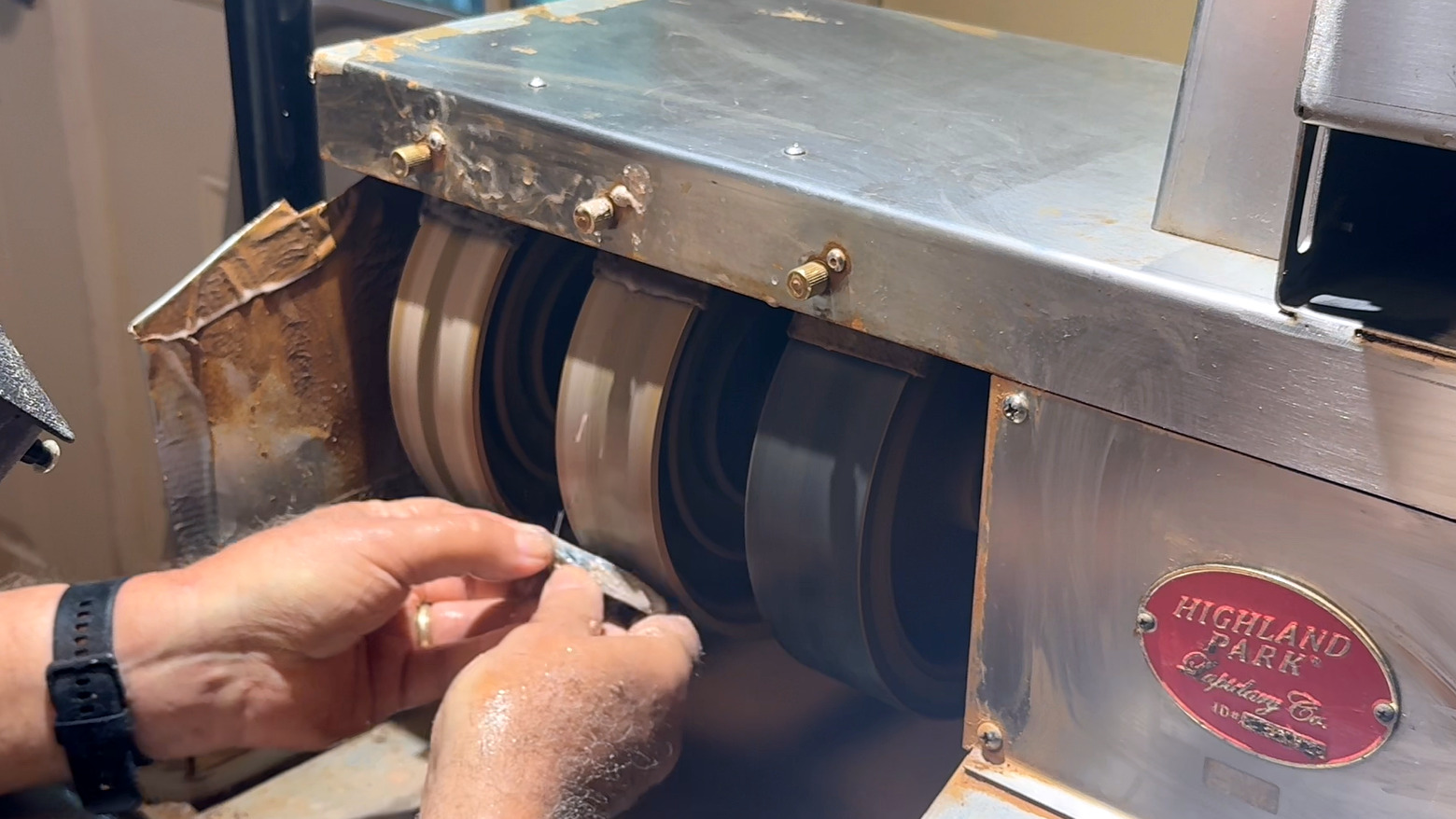
Cutting opal at the studio cabbing machine

Cut in the studio

Regional character guides the cut.

Structure, body tone and play of color determine how each opal is shaped, finished and eventually used.

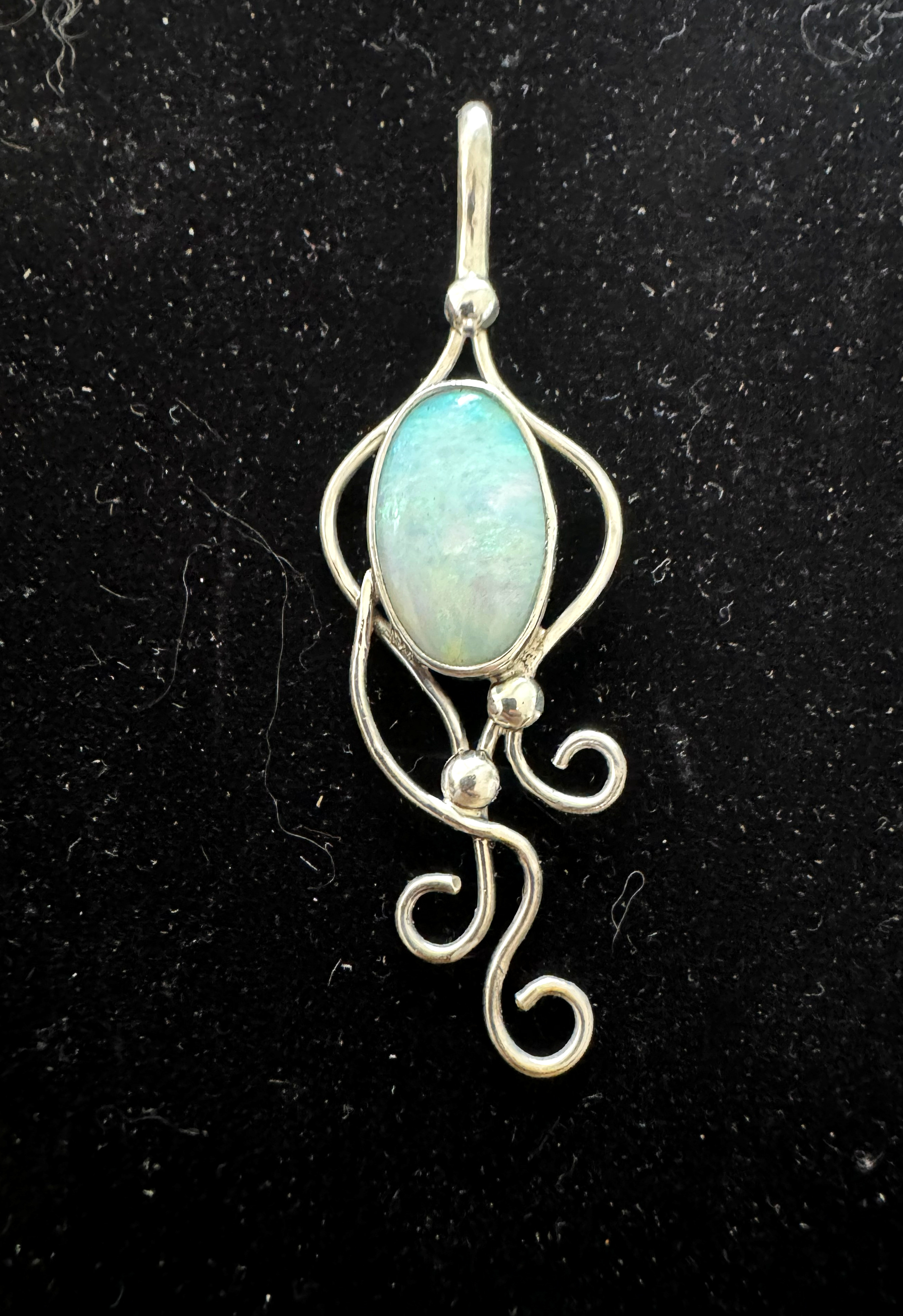
Art Nouveau-inspired fabricated opal pendant
An opal carried into a fabricated Art Nouveau design.

Australian opal

One country.
Distinct fields and formations.

Australian opal makes up the majority of my opal collection. Each producing region has its own geological character, and I select and cut the material with those natural differences in mind.

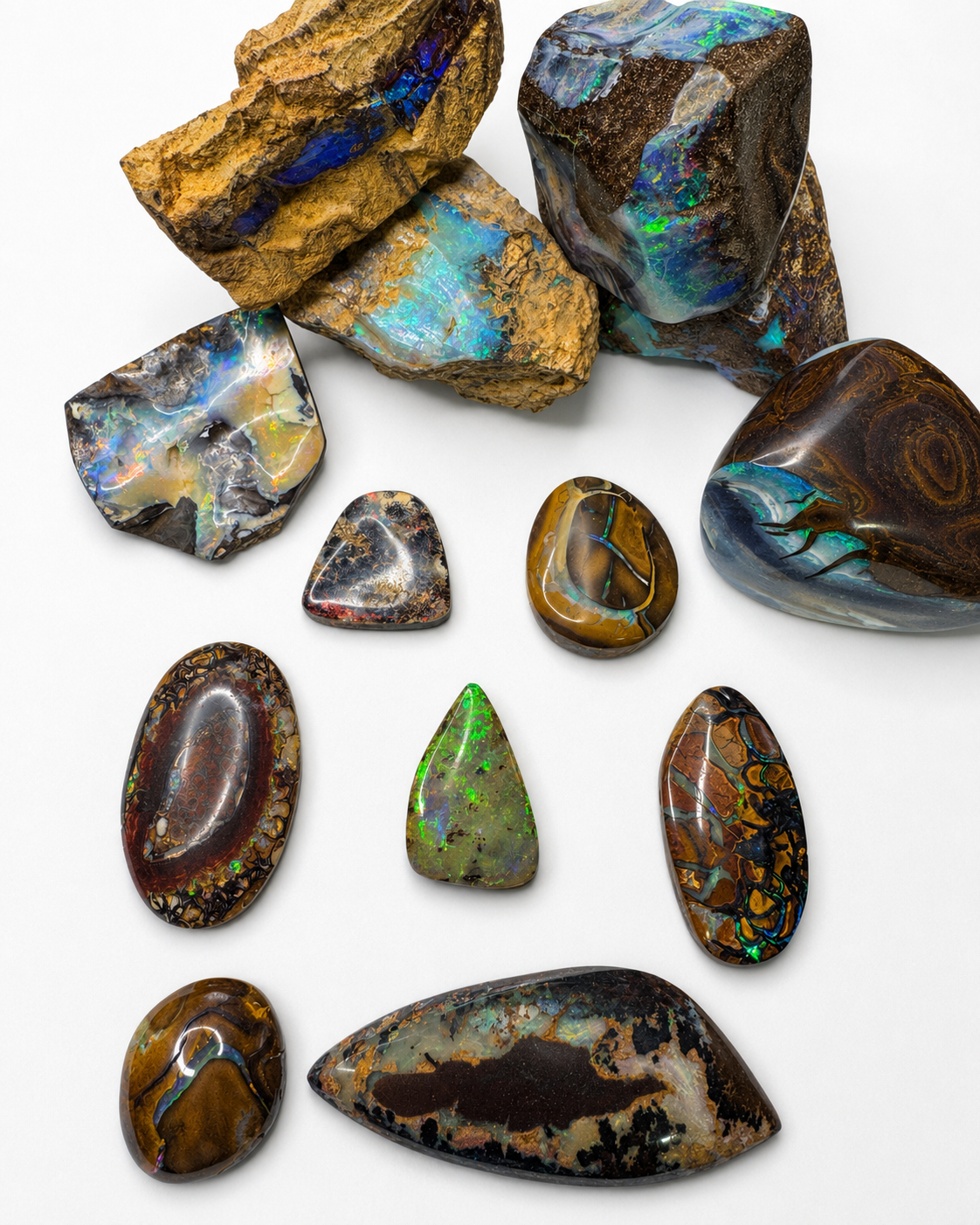
Boulder Opal

Boulder Opal

Boulder opal comes from several distinct regions within Queensland, including Winton, Quilpie, Yowah and Koroit. It forms in seams and pockets within ironstone, as well as in matrix opal where fine lines and flashes of color travel through the host rock in intricate patterns. The ironstone remains part of the finished stone, giving each cabochon its own structure, contrast and character.
Coober Pedy Opal

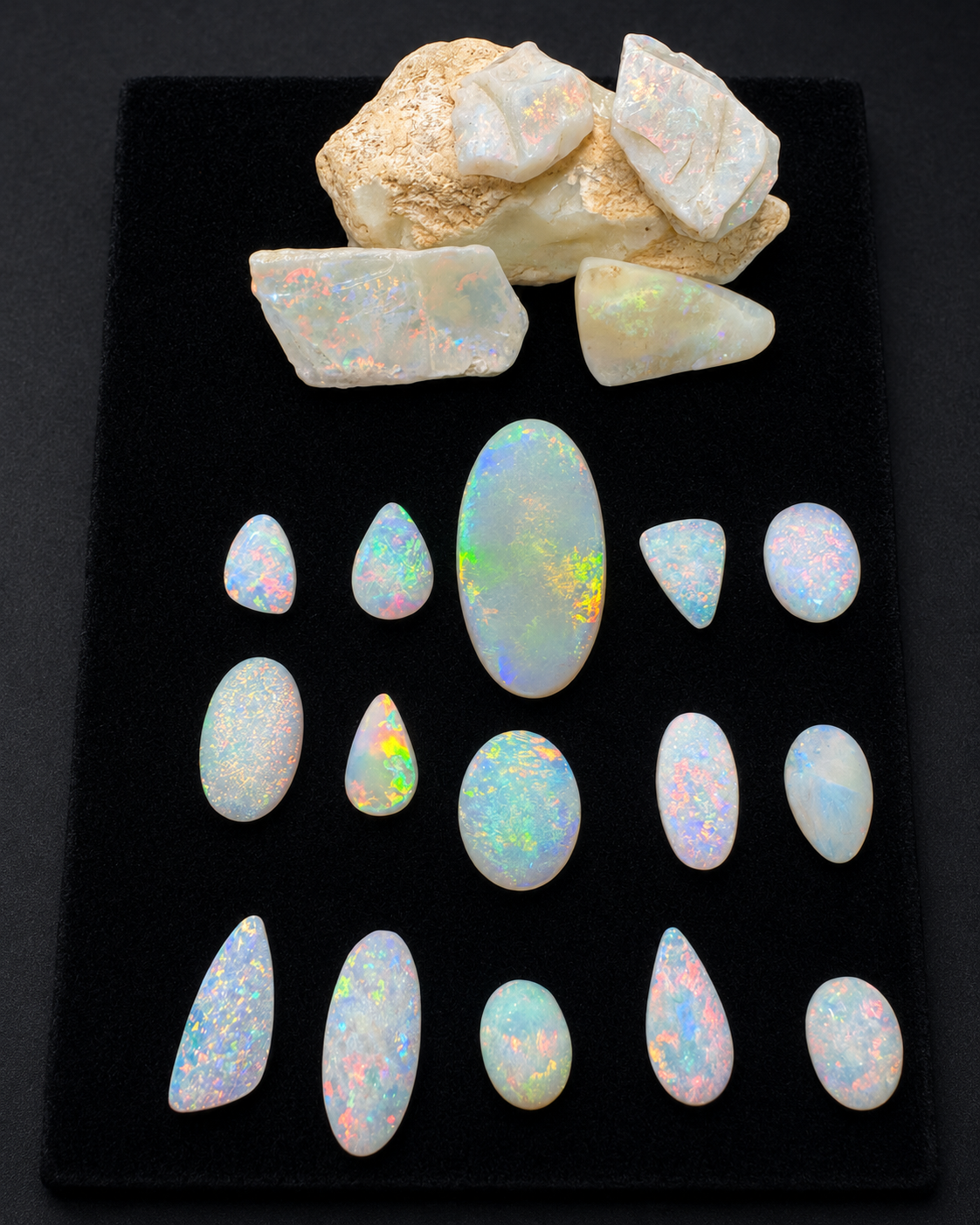
Coober Pedy Opal

Coober Pedy and its surrounding South Australian fields have historically been credited with producing as much as 90 percent of the world’s opal. The area produces white opal, light or milky opal, and crystal opal with colors ranging from subtle flashes to vivid displays. It is also known for pseudomorphs of clams and other marine life, opalized fossils that preserve the original form. Imagine an ancient seashell transformed into opal, still holding its shape while flashing with brilliant color.

Lightning Ridge Opal

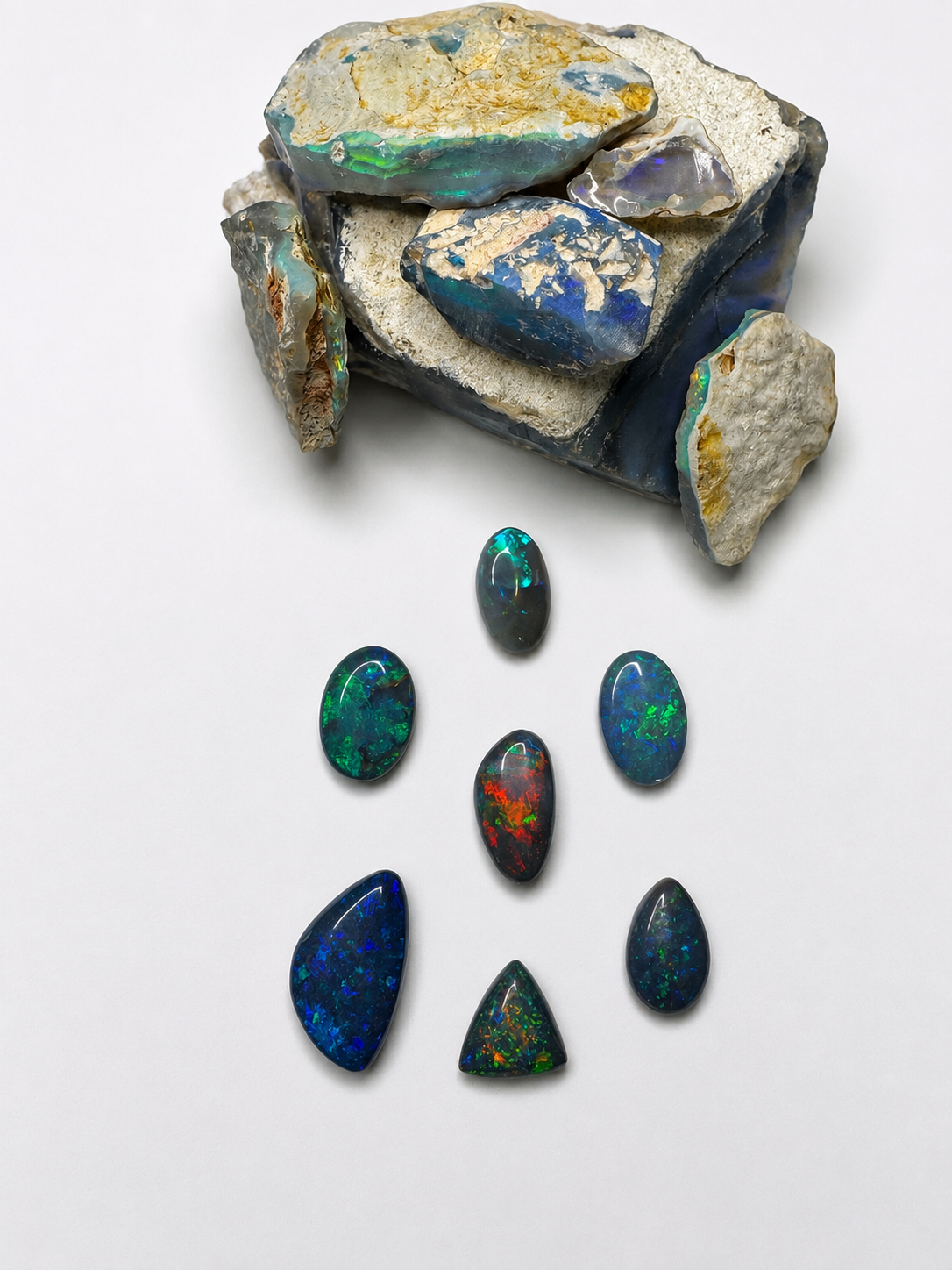
Lightning Ridge Opal

Lightning Ridge is often regarded as producing some of the finest and rarest opal in the world. Its most valuable variety is black opal, whose dark body tone intensifies its play of color and can produce vivid flashes of red, blue and green. The region also produces exceptional crystal opal, considered by many collectors and cutters to be among the world’s finest, as well as white opal, which is beautiful but less rare.

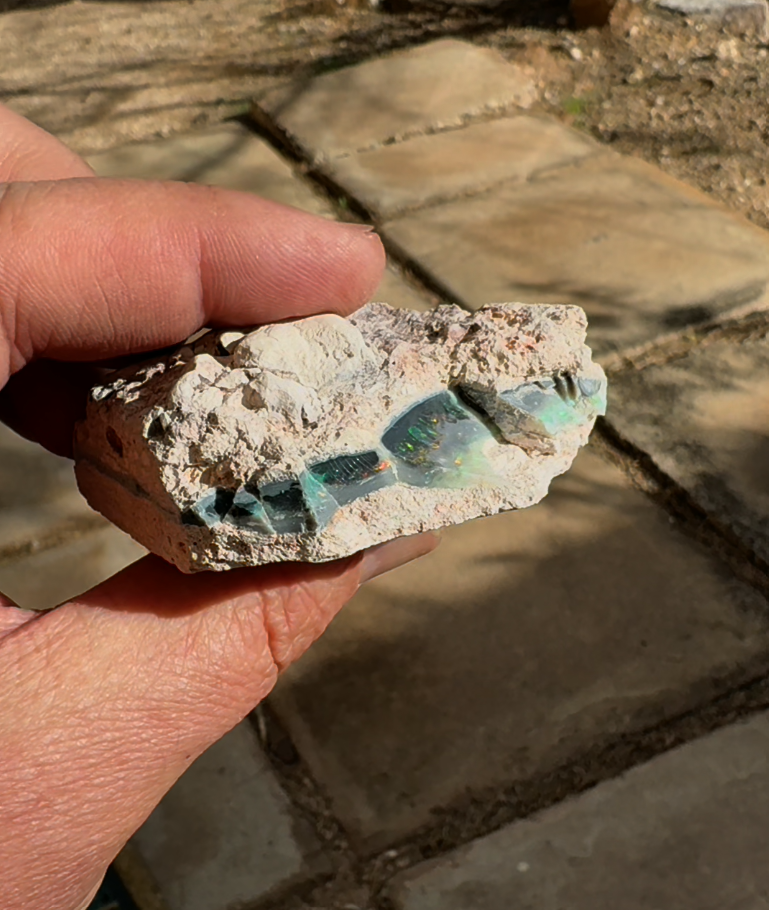
Lightning Ridge rough

The seam is where the possibilities begin.

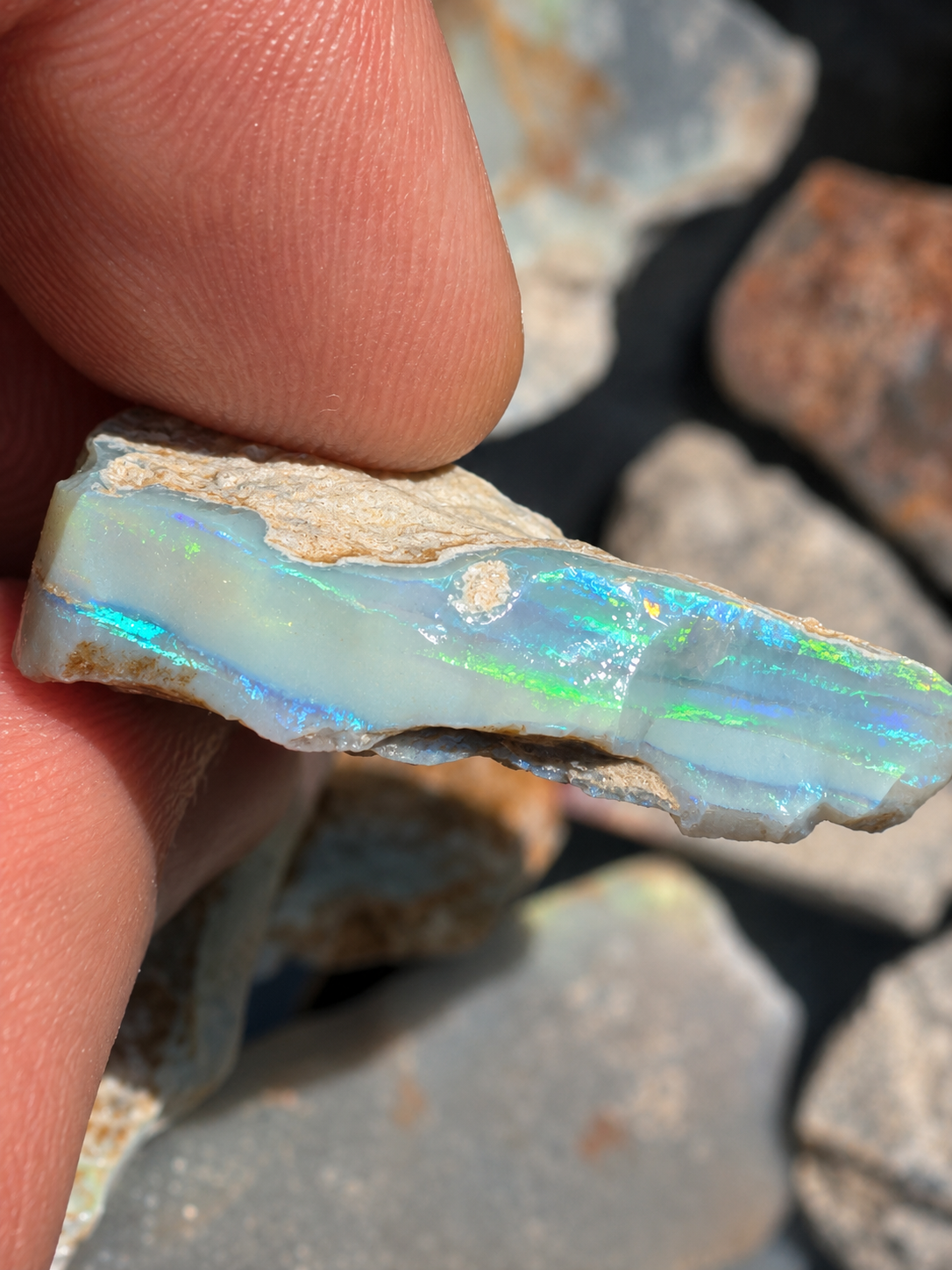
Before cutting, the exposed seam gives the first indication of body tone, color and how the opal sits within its host material. The larger rough specimen keeps that narrow band in its natural context.

Close view of a colorful opal seam in Lightning Ridge rough
Color running through the seam
A Lightning Ridge rough opal specimen held in hand
Lightning Ridge opal in its host material
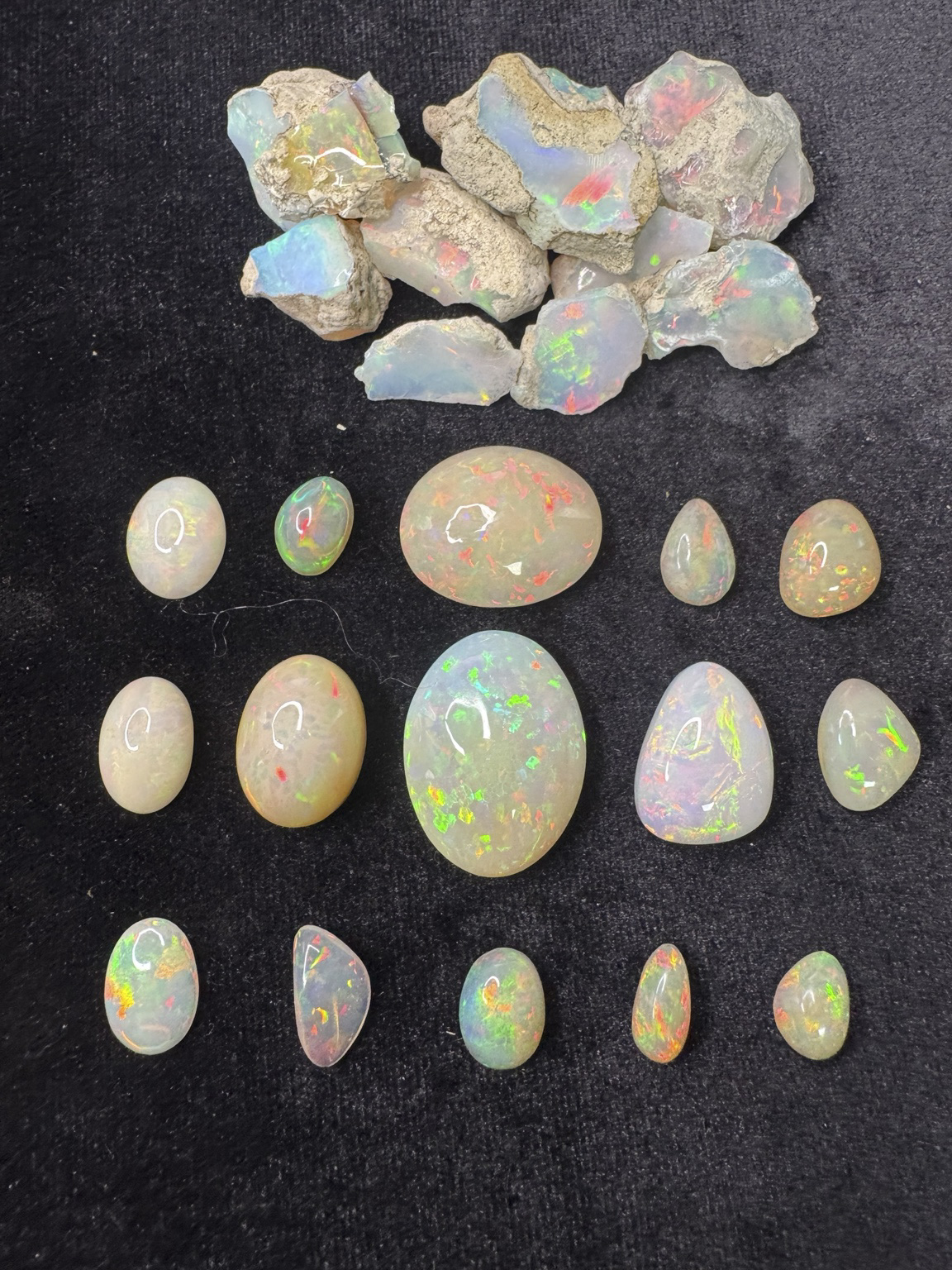
Ethiopian crystal opal shown as rough and finished cabochons

Ethiopian opal

Exceptional crystal.
A different kind of care.

Most Ethiopian crystal opal used in jewelry comes from the Welo region, also spelled Wollo, particularly the deposits near Wegel Tena. This material can show remarkable transparency and vivid play of color that can give Australian crystal opal a run for its money. It is hydrophane, meaning it can absorb water and other liquids, so it requires special handling, appropriate jewelry design and clear care instructions.